

This article is an on-site version of our FirstFT newsletter. Subscribers can sign up to our Asia, Europe/Africa or Americas edition to get the newsletter delivered every weekday morning. Explore all of our newsletters here
Good morning and welcome back. In today’s newsletter:
-
Talks on US peace plan for Ukraine progress
-
EU to tighten foreign investment rules
-
European banks put out sweeteners for investors
We begin in Geneva, where US and Ukrainian officials reported progress in efforts to end the war with Russia.
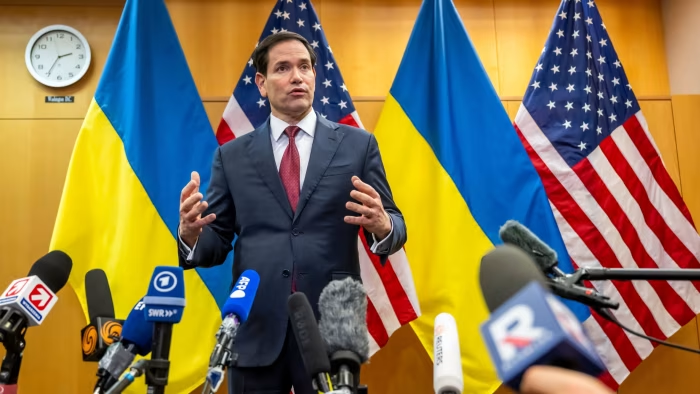
The latest: Following negotiations with Ukrainian and European officials, US secretary of state Marco Rubio said a “tremendous” amount of progress had been made, adding that it was one of the most productive days in talks.
“I feel very optimistic that we’re going to get there in a very reasonable period of time,” Rubio said.
Unresolved points: Rubio said talks would continue. “I don’t want to declare victory or finality here. There’s still some work to be done,” he said.
The US secretary of state would not say if any breakthroughs had been made on some of the more contentious parts of the 28-point plan, including its demand that Ukraine cede territory in the Donbas region that remains under its control. Read more on yesterday’s talks.
Here’s what else we’re keeping tabs on today:
-
Summit: EU and African Union leaders meet in the Angolan capital of Luanda.
-
Transatlantic trade: US commerce secretary Howard Lutnick meets EU trade ministers in Brussels to discuss trade relations.
-
BBC: Chair Samir Shah and Sir Robbie Gibb, a non-executive board member, face questions from MPs about editorial standards at the national broadcaster amid the edited Trump speech scandal.
-
UK: The CBI’s annual conference takes place in London, with business secretary Peter Kyle, Conservative party leader Kemi Badenoch and British Airways chair Sean Doyle scheduled to speak.
Five more top stories
1. Exclusive: The EU is planning to tighten its foreign investment rules to ensure that Chinese companies do not gain advantage from the bloc’s open market without generating benefits for local workers and sharing technology. Read more on the proposal.
2. European lenders are dangling sweeteners for investors, helping boost their share prices. But a stock rally over the past two years is showing signs of fading while executives are bracing themselves for a more challenging period ahead as interest rates fall.
3. BHP has said it does not intend to bid for Anglo American after all, walking away from talks after it was rebuffed by its smaller rival for the second time in 18 months. The Australian miner had previously approached Anglo American’s board in a move that could have disrupted a $50bn merger between the UK company and Canada’s Teck Resources.
4. Investors have warned UK chancellor Rachel Reeves of the risks of delaying efforts to rein in borrowing in Wednesday’s Budget after official figures showed she is struggling to meet her debt targets. Read the full story.
5. A space start-up hoping to build a European rival to Elon Musk’s SpaceX is preparing a new funding round as it races to develop Europe’s first reusable capsule to transport cargo to the International Space Station. Read more on The Exploration Company.
Join Financial Times’ experts on November 28 at 1pm London time to analyse how Reeves’ Autumn Budget will affect the economy. Subscribers can sign up here for this exclusive event.
The Big Read
© FT montage; Dreamstime
Small businesses account for the majority of UK employment and private sector output growth. Yet bank lending to the sector has fallen since 2011.
If the chancellor can find a way to solve the credit drought that smaller companies face, the country’s prospects would receive a boost.
We’re also reading . . .
-
Seasonal appeal: Promoting an understanding of money can help guide young people towards future prosperity. Find out how you can support the work of FLIC, the FT’s financial education charity.
-
Nuclear hurdles: The UK has become the most expensive country in the world to build a nuclear power station, according to a government review.
-
CEO one-upmanship: The audience that chief executives are often most anxious to impress is their peers, writes Anjli Raval.
Chart of the day
Reeves’ challenge is to remedy the disaster that Brexit has been for the UK. The country’s openness to trade in goods has dropped sharply relative to that of large EU member states since leaving the bloc. A closer relationship with Brussels is essential to pull the country out of its economic hole, writes Martin Wolf.
Take a break from the news . . .
Roula Khalaf, Gillian Tett, Jay Rayner and other FT journalists share their favourite books among this year’s titles.
© Cat O’Neil
