

Traditionally, Turkey’s attention toward Africa has been more focused on the part of the continent bordering the Mediterranean Sea, which from modern-day Egypt to Algeria were once parts of the Ottoman Empire. However, rapid geopolitical changes in the Sahel region have prompted Ankara’s growing engagement with this more distant part of Africa.
A series of coups in Niger, Mali and Burkina Faso since the early 2020s have led to France’s gradual military withdrawal from the region. And following Donald Trump’s return to the White House, Washington limited its political, military and, most importantly, humanitarian engagement with the Sahel. The resulting vacuum has been filled by other outside actors, particularly Russia with regard to the region’s ongoing security crisis, but also China with regard to mining projects and even Iran. Lately, however, it is Turkey that now features as a prominent partner in the Sahel states’ cooperation with outside powers.
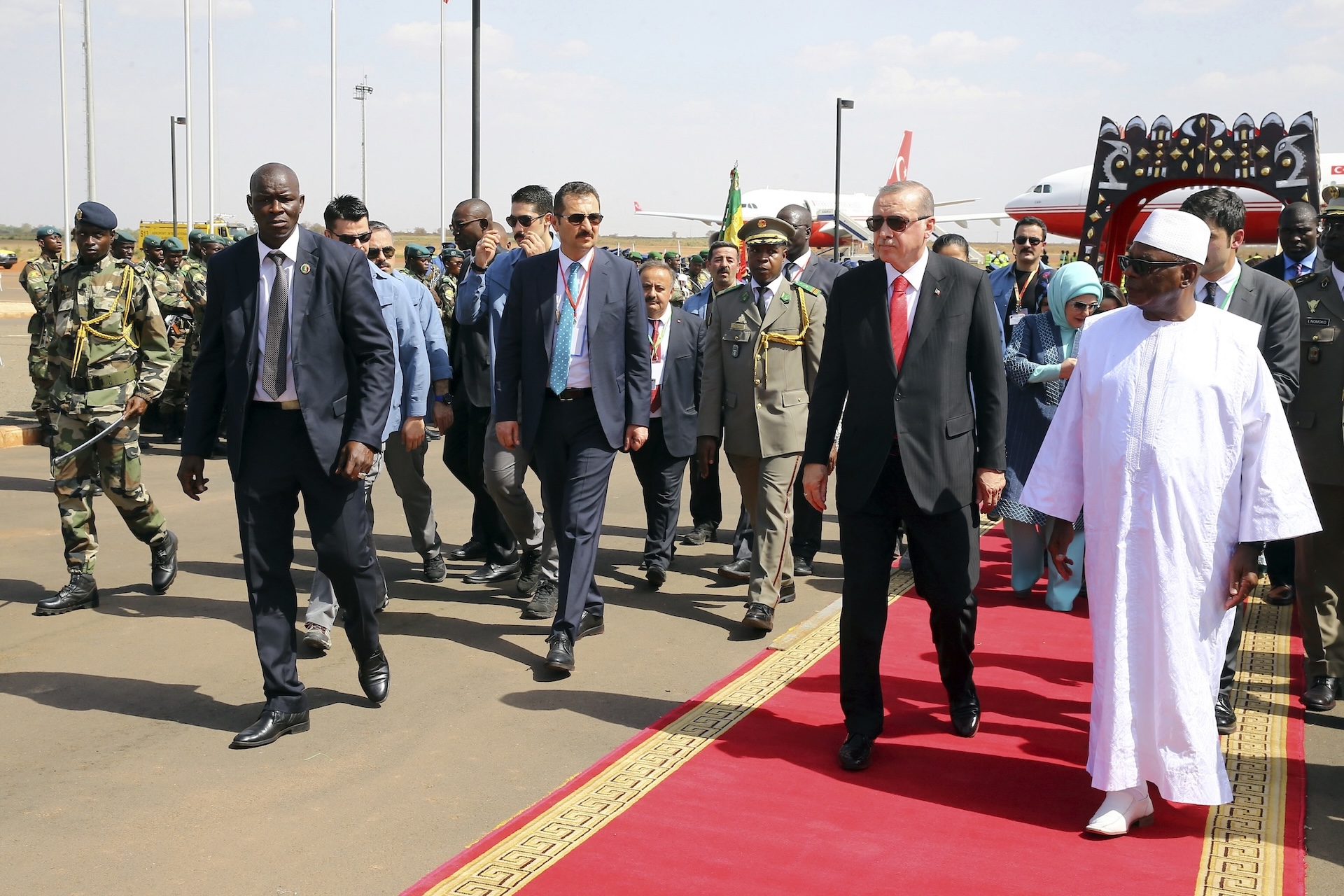
The visit in 2018 by Turkish President Recep Tayyip Erdogan to Algeria, Mauritania, Senegal and Mali can be seen as the starting point of Ankara’s greater engagement with the Sahel region. Turkey has been careful in positioning itself as a power that seeks mutual benefit in bilateral relations with the Sahel countries, while highlighting the difference in its approach with that of France and other Western countries. Erdogan’s further visits in 2021 and 2022 to West African states demonstrated the consistency of his government’s engagement with the region.
