

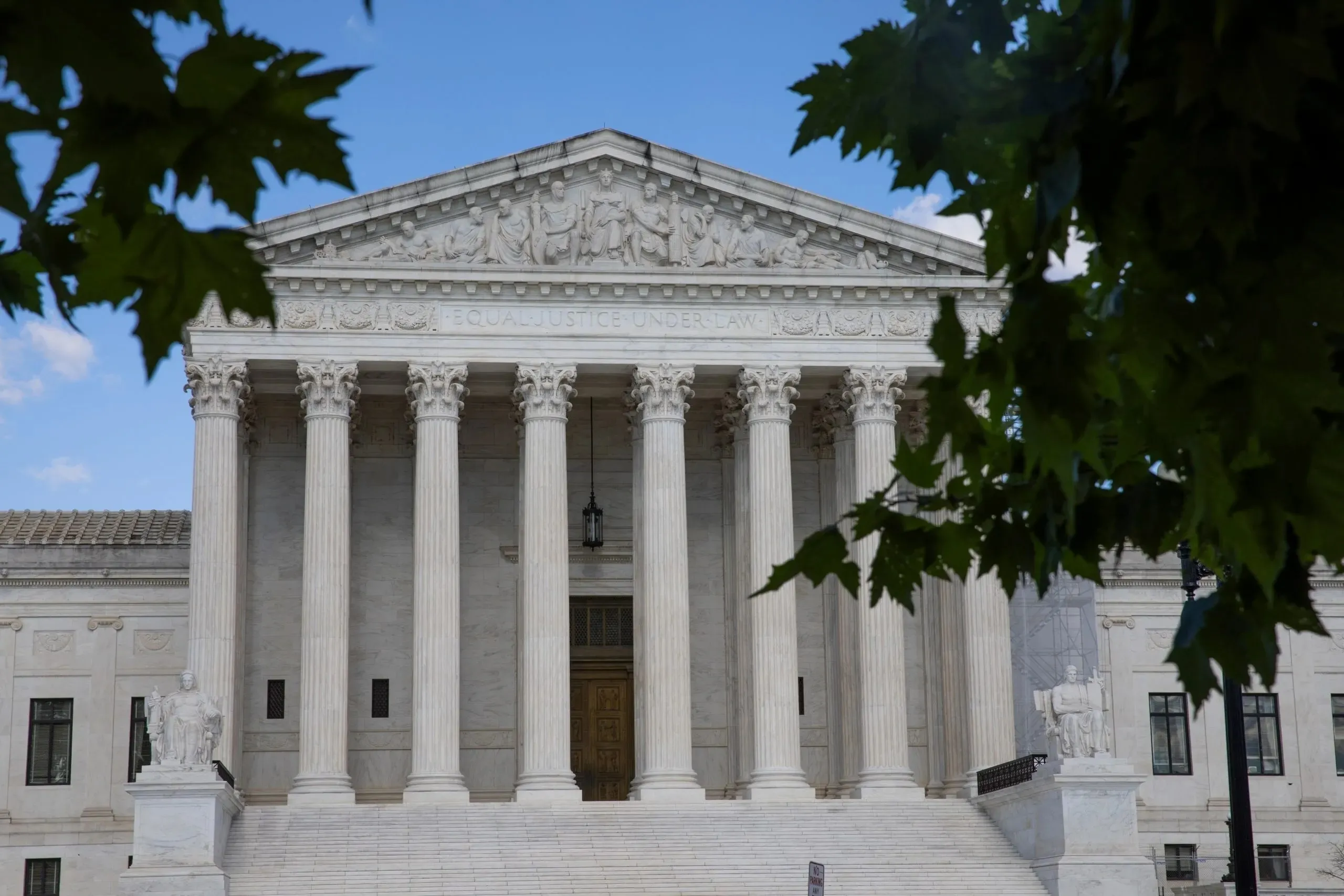
On Monday, Dec. 8, the Supreme Court will hear oral arguments in Trump v. Slaughter, a battle that has been brewing, on one hand, since soon after President Donald Trump took office in January and, on the other hand, for years. At the center of the battle are laws that limit the president’s ability to fire the heads of independent, multi-member federal agencies like the Federal Trade Commission. The president and his supporters are proponents of a doctrine known as the “unitary executive” theory – the idea that the president should have complete control over the executive branch. Under this theory, the president should be able to fire any member of the executive branch, and laws – like the one at the center of this case – that restrict his ability to do so violate the constitutional separation of powers between the three branches of government.
What is the agency and what are the laws at the center of the case?
Established by President Woodrow Wilson in 1914, the Federal Trade Commission describes its mission as “[p]rotecting the public from deceptive or unfair business practices and from unfair methods of competition through law enforcement, advocacy, research, and education.” The FTC has five commissioners, who are appointed by the president and confirmed by the Senate to serve seven-year terms. No more than three of the commissioners may come from any one political party. The president can only remove a commissioner from office “for inefficiency, neglect of duty, or malfeasance in office.”
How did the dispute start?
The dispute before the court next week began in March, when Trump fired Rebecca Slaughter, whom he originally nominated to the FTC in 2018. In 2023, then-President Joe Biden renominated her to serve a second term, which was scheduled to end in 2029.
In an email firing her, Trump told Slaughter that allowing her to remain on the commission would be “inconsistent with [the] Administration’s priorities”; he did not contend that he was relying on any of the legal grounds for removal – “inefficiency, neglect of duty, or malfeasance in office” – to terminate her. (At the same time, Trump also fired another Democratic appointee, Alvaro Bedoya. Bedoya initially joined Slaughter’s challenge to her firing but later resigned from the commission, citing financial reasons.)
Has the Supreme Court addressed this question?
In 1935, the court upheld the FTC’s removal provision in Humphrey’s Executor v. United States. Two years earlier, President Franklin Roosevelt had fired William Humphrey, a commissioner on the FTC, before his term ended. Roosevelt had previously sought Humphrey’s resignation, contending “that the aims and purposes of the Administration with respect to the work of the Commission can be carried out most effectively with personnel of my own selection.” But when Humphrey refused to quit, Roosevelt sent him a letter removing him from the commission – without citing any cause for doing so.
Humphrey died a few months later, and his estate went to court to seek the salary that it said he was owed. The case made its way to the Supreme Court, which concluded that the removal statute only permitted the president to fire FTC commissioners “for inefficiency, neglect of duty, or malfeasance in office.”
“The words of the act are definite and unambiguous,” Justice George Sutherland wrote for the court. That text, Sutherland said, combined with “the legislative reports, and the general purposes of the legislation … all combine to demonstrate the Congressional intent to create a body of experts who shall gain experience by length of service—a body which shall be independent of executive authority, except in its selection, and free to exercise its judgment without the leave or hindrance of any other official or department of the government. … And to hold that, nevertheless, the members of the commission continue in office at the mere will of the President, might be to thwart, in large measure, the very ends which Congress sought to realize by definitely fixing the term of office.”
The court next considered whether the FTC removal law was “an unconstitutional interference with the executive power of the President.” The executive branch pointed to a 1926 case, Myers v. United States, in which the Supreme Court ruled that the president could fire a postmaster without getting approval from the Senate, despite a federal law imposing such a requirement. The court in Myers held that the removal law violated the Constitution because “[t]he power of removal is incident to the power of appointment, not to the power of advising and consenting to appointment, and when the grant of the executive power is enforced by the express mandate to take care that the laws be faithfully executed, it emphasizes the necessity for including within the executive power as conferred the exclusive power of removal.”
In Humphrey’s Executor, the Supreme Court rejected the government’s argument that the outcome in that case was dictated by Myers. In Myers, the court said, “the narrow point actually decided was only that the President had power to remove a postmaster … without the advice and consent of the Senate as required by act of Congress.” The circumstances of the two cases, the court emphasized, were very different because “[a] postmaster is an executive officer restricted to the performance of executive functions. He is charged with no duty at all related to either the legislative or judicial power.”
By contrast, the court wrote, the FTC “is an administrative body created by Congress to carry into effect legislative policies embodied in the statute in accordance with the legislative standard therein prescribed, and to perform other specified duties as a legislative or as a judicial aid. Such a body cannot in any proper sense be characterized as an arm or an eye of the executive.”
The court concluded that “[w]hether the power of the President to remove an officer shall prevail over the authority of Congress to condition the power by fixing a definite term and precluding a removal except for cause will depend upon the character of the office; the Myers decision, affirming the power of the President alone to make the removal, is confined to purely executive officers; and as to officers of the kind here under consideration, we hold that no removal can be made during the prescribed term for which the officer is appointed except for one or more of the causes named in the applicable statute.”
What are Rebecca Slaughter’s arguments?
Slaughter pointed to a long history – dating back to the founding of the United States – of “multimember agencies whose members are protected from at-will removal.” All three branches of government, she said, “have recognized that this agency structure advances the liberty interest that the separation of powers exists to protect”: Congress has created such agencies, presidents “have signed into law numerous bills creating, funding, and empowering ‘some two-dozen multimember independent agencies,’” and the Supreme Court has upheld those laws “time and again.”
But in any event, the doctrine of stare decisis – the principle that courts should not generally overturn their prior precedent without a good reason to do so – requires the court to keep Humphrey’s Executor and other related cases in place, Slaughter argued. The Trump administration has not shown that there is any “special justification for overruling a 90-year-old line of precedent on which much of modern governance is based,” she said. Those cases, she wrote, “are neither egregiously wrong nor unworkable” – two of the factors that the court considers when deciding whether to overrule an earlier case. If there are concerns about independent multi-member agencies like the FTC, she concluded, Congress and the executive branch – rather than the courts – should address them.
If the Supreme Court were to overturn “a century of precedent at this late date,” Slaughter continued, it “would profoundly destabilize institutions that are now inextricably intertwined with the fabric of American governance.”
What are the government’s arguments?
Article II of the Constitution “vest[s]” the “executive power” in the president and directs him to “take Care that the Laws be faithfully executed” – which in turn means that he has control over the people who execute the laws, according to the government. “That power to control executive officers,” the Trump administration argued, naturally “includes the ability to remove them at will” – an ability that the text does not limit and which thus extends to the heads of multimember agencies like the FTC.
The Trump administration acknowledged that the Supreme Court in Humphrey’s Executor had upheld the FTC’s removal provision. But in doing so, the Trump administration said, the court had emphasized that the FTC did not exercise executive power, but instead “purportedly had only ‘quasi-legislative or quasi-judicial powers.’” The Supreme Court has since indicated in its case law, however, that the powers that the FTC exercised in 1935, when it decided Humphrey’s Executor, were executive. Moreover, the government added, “the executive power that the FTC and other agencies now exercise vastly exceeds the authority that Humphrey’s Executor attributed to the 1935 FTC. Like other modern administrative agencies,” the government noted, “today’s FTC can bring civil enforcement suits against private parties, promulgate binding rules, issue final orders in administrative adjudications, and investigate potential violations of the law.”
But to the extent that Humphrey’s Executor is still good law, the Trump administration concluded, the Supreme Court should overrule it. “The notion that some agencies that exercise executive power can be sequestered from presidential control seriously offends the Constitution’s structure and the liberties that the separation of powers protects.”
How did the lower courts rule on Slaughter’s challenge?
Slaughter went to federal court in Washington, D.C., where U.S. District Judge Loren AliKhan ordered the Trump administration to reinstate her.
The Trump administration asked the U.S. Court of Appeals for the District of Columbia Circuit to put AliKhan’s ruling on hold while it appealed. By a vote of 2-1, the court of appeals rejected that request.
Pointing to the Supreme Court’s decision in Humphrey’s Executor, the majority – made up of Judges Patricia Millett and Nina Pillard – concluded that there was “no likelihood of success” that the Trump administration would ultimately win on appeal, a key factor that courts consider in deciding whether to grant temporary relief.
The majority acknowledged that, in earlier proceedings on the emergency docket, the Supreme Court had allowed the president to fire members of the National Labor Relations Board, the Merits Systems Protection Board, and the Consumer Product Safety Commission, which have similar laws governing their members’ removal in that this could not be done without cause. But Humphrey’s Executor was “controlling and directly on point,” the majority said. The earlier cases, the majority wrote, “do not permit this court to do the Supreme Court’s job of reconsidering” the decision in Humphrey’s Executor – particularly when this dispute involves the same agency at the heart of Humphrey’s Executor and therefore (unlike the earlier proceedings) would not require “an extension of Humphrey’s Executor to a new context.”
In a dissenting opinion, Judge Neomi Rao indicated that she would have granted the government’s request to put AliKhan’s order on hold. In Rao’s view, the earlier proceedings on the emergency docket involving the NLRB, the MSPB, and the CPSC were “virtually identical” to Slaughter’s case. And even if Slaughter’s removal did violate federal law, she continued, AliKhan went too far in ordering the Trump administration to reinstate her, because such a command (among other things) “interferes with the President’s exclusive powers.”
How did the case get to the Supreme Court?
After the D.C. Circuit rejected the government’s plea to pause AliKhan’s order, U.S. Solicitor General D. John Sauer came to the Supreme Court on Sept. 4, asking the justices to put the order on hold while the government’s appeal continues. Sauer told the court that Slaughter’s case was “indistinguishable” from those of members of the NLRB and the MSPB – who were also removed by Trump and whose reinstatements the Supreme Court had blocked in May. Additionally, Sauer asked the Supreme Court to take up the case and hear oral arguments without waiting for the D.C. Circuit to rule on the government’s appeal.
On Sept. 8, Chief Justice John Roberts, who handles emergency appeals from the District of Columbia, temporarily blocked AliKhan’s order to give the court time to consider the Trump administration’s request.
Slaughter agreed with the Trump administration that the Supreme Court should take up her case and hear arguments before the D.C. Circuit rules. But she insisted that she should ultimately prevail, arguing that Humphrey’s Executor continues to apply to her case and bars the president from firing her unless one of the three criteria established by law – “inefficiency, neglect of duty, or malfeasance in office” – is present.
On Sept. 22, the court agreed to weigh in on Slaughter’s case and it set oral arguments for early December. A majority of the justices kept AliKhan’s order on hold until the court issues its decision in the dispute, effectively clearing the way for Trump to move forward with firing Slaughter.
Justice Elena Kagan dissented from her colleagues’ decision to keep AliKhan’s order on hold. In a brief opinion joined by Justices Sonia Sotomayor and Ketanji Brown Jackson, Kagan wrote that her colleagues in the majority had allowed Trump to remove, contrary to federal law, “any member he wishes, for any reason or no reason at all. And he may thereby extinguish the agencies’ bipartisanship and independence.”
Who will argue next week?
Sauer, the federal government’s top lawyer in the Supreme Court, will represent the Trump administration. It will be the sixth argument before the court for Sauer, who while in private practice successfully represented then-candidate Trump in his bid for broad immunity from criminal prosecution for his official acts during his first term in office.
Slaughter is represented by Amit Agarwal of the Protect Democracy Project, which describes itself as “a nonpartisan, nonprofit organization dedicated to preventing American democracy from declining into a more authoritarian form of government.” Agarwal served as a law clerk to Justice Samuel Alito and then-Judge Brett Kavanaugh; it will be his first time arguing before the justices.
What are the possible outcomes of the court’s decision?
A ruling for the government could take two forms. The court could hold that the modern FTC is sufficiently different from the FTC in 1935 that Humphrey’s Executor does not apply even if it is still good law and the removal statute violates the Constitution, or the justices could overrule Humphrey’s Executor altogether. In either scenario, Trump’s firing of Slaughter would remain in place.
If the court upholds the removal statute, it then must determine whether Slaughter should be returned to the FTC. The Trump administration contended that the Constitution also bars courts from ordering the reinstatement of an executive branch official whom the president has fired. “Such an order imposes a distinct constitutional harm … by forcing the President to entrust executive power to someone he has already determined is unfit to exert it. Consistent with that constitutional concern, executive officers have historically contested their removals by seeking back pay, not by demanding reinstatement.”
Slaughter countered that courts have long reinstated officials, including federal ones, who were improperly removed from office. Courts can also issue declaratory judgments – such as a ruling that an official was wrongfully fired, which will effectively require the government to allow the official to return to work.
What are the broader potential effects of the court’s decision?
The court’s eventual ruling could determine whether Congress can limit not only the president’s ability to fire members of the FTC but also his ability to terminate other heads of multimember independent agencies. As noted above, Trump has already fired members of the NLRB, MSPB, and CPSC; on Nov. 26, the justices deferred their decision on Trump’s request to be able to fire the Register of Copyrights. And on Jan. 21, the court will hear oral arguments in a challenge by Lisa Cook, a governor on the Federal Reserve Board, to Trump’s effort to fire her for alleged mortgage fraud.
When will the court reach its decision?
There is no way to know how long it will take the justices to issue their decision. When the court agreed in late September to take up the government’s appeal, it fast-tracked the case for oral arguments in early December – which suggests, but does not guarantee, that it will issue a decision on an expedited basis. If so, a ruling could come sometime in early 2026. But in any event, the justices will almost certainly resolve the case by late June or early July 2026.
Cases: Trump v. Slaughter (Independent Agencies)
Recommended Citation:
Amy Howe,
Trump v. Slaughter: An explainer,
SCOTUSblog (Dec. 3, 2025, 9:30 AM),
https://www.scotusblog.com/2025/12/trump-v-slaughter-an-explainer/
