

Unlock the White House Watch newsletter for free
Your guide to what Trump’s second term means for Washington, business and the world
Donald Trump’s top trade negotiator has warned the EU that trade remains a “flashpoint” with Washington, as US officials grow frustrated at the bloc’s slow pace in cutting tariffs and regulations.
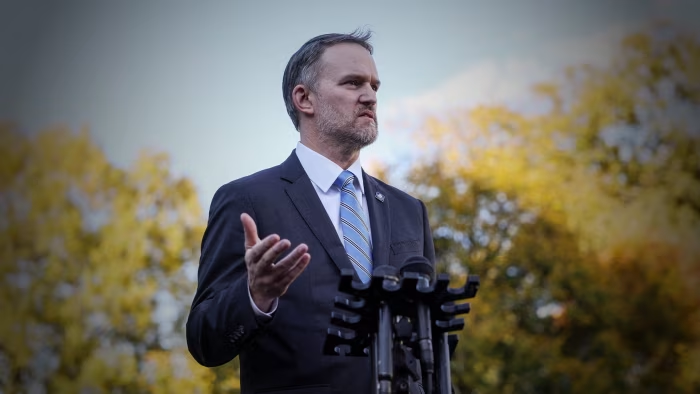
Jamieson Greer, the US trade representative, told the Financial Times that the EU’s duties affecting American exports were still too high despite the deal struck between the US president and European Commission president Ursula von der Leyen in July.
“Trade has always been a flashpoint,” Greer said. “They have many regulations and non-tariff barriers that block our exports and reduce our effective market access over there, while we historically have had very broad access for them . . . It’s quite unbalanced.”
“We did not solve every problem in our relationship with our joint statement from earlier in the year,” he added, referring to the agreement reached in Scotland this summer.
Greer will head to Europe for more trade talks next week.
The comments from Trump’s most senior trade negotiator reflect deepening concern among US officials with the EU’s slow implementation of the pact, including cuts to levies on American exports to the continent.
“They’re being kind of slow right now on all of this, which is unfortunate,” said one senior administration official.
The bloc is in danger of squandering a period of better relations between the US president and Europe, following friction between Brussels and Washington on issues from the war in Ukraine and defence spending to trade, they said.
“I think that we’re in a moment where the president has changed his views on Europe and approach to Europe in the past six months . . . I hope that Europe doesn’t miss its opportunity to capitalise on the president’s current approach,” the official added.
Greer will travel to Europe between November 19 and 22, where he will meet Maroš Šefčovič, the EU commissioner for trade, to push for progress. US commerce secretary Howard Lutnick will meet Šefčovič and EU trade ministers on a visit to Brussels on November 24.
The EU promised to lower its duties on US industrial goods, seafood, pork and some agricultural goods, but it has not yet implemented any of the cuts, which await approval by the European parliament.
The parliament’s green light is unlikely before February, according to European officials. MEPs will first vote on amendments that would postpone tariff cuts on steel and aluminium until Washington reduces its 50 per cent levies on the metals.
The US has lowered its tariffs on European cars and most other goods to 15 per cent as part of the bargain — though they are still substantially higher than when Trump retook office in January.
The US has also increased pressure on the bloc over rules that it argues unfairly penalise American companies, including regulations on corporate supply chains and banning some goods produced on deforested land.
Recommended
The signs of fresh commercial friction between the world’s two biggest economies come after months of trade volatility triggered by Trump’s so-called liberation day tariffs.
The US has struck a series of deals with trading partners since then — including an agreement reached with Switzerland on Friday — but also ratcheted up levies on other countries such as Canada.
The US has expressed its complaints in a letter to Brussels, two European officials said, and is preparing a five-point plan in response.
The proposal, first reported by Bloomberg, would include talks on aligning regulations, mutual reduction of steel tariffs and zero tariffs on wines and spirits, a longtime EU demand.
