

Minnesota Gov. Tim Walz recently faced questions about a state fraud scandal involving Somalis that spawned a feud between him and President Donald Trump.
The scandal, outlined in a Nov. 29 article in The New York Times, centered on a nonprofit called Feeding Our Future that received federal funding to feed low-income children. NBC’s “Meet the Press” host Kristen Welker asked Walz, the 2024 Democratic vice presidential nominee, on Nov. 30 about the schemes mentioned in the article that involved people convicted in Minnesota for stealing taxpayer money during the pandemic.
Welker asked Walz: “Do you take responsibility for failing to stop this fraud in your state?”
The governor replied, “Well, certainly, I take responsibility for putting people in jail. Governors don’t get to just talk theoretically. We have to solve problems.”
His statement gives the impression that state officials were on the front lines of prosecuting historic fraud. That’s not what happened. Federal prosecutors led the investigations and brought the charges.
We asked Walz for evidence the governor was responsible for convictions.
“Prosecutions don’t materialize out of thin air,” Walz spokesperson Claire Lancaster said.
State officials cited Minnesota agencies’ work, including by the Bureau of Criminal Apprehension, whose laboratory provided forensic testing on evidence. Jen Longaecker, a Minnesota Department of Public Safety spokesperson, pointed to the bureau’s role in identifying fingerprints on a gift bag used in a Feeding Our Future juror bribery scheme. But that case was an offshoot of the initial fraud investigation.
Trump cited the scandal as a reason to end Temporary Protected Status for Somalis in Minnesota, writing Nov. 21 on Truth Social, “Somali gangs are terrorizing the people of that great State, and BILLIONS of Dollars are missing.”
Temporary Protected Status is for people from certain countries experiencing war, natural disasters or epidemics and protects them from deportation. There are about 700 Somalis in the U.S. with TPS, many in Minnesota. Immigration lawyers said it isn’t possible to take away the status state by state.
Before Trump vowed to do that, the TPS program for Somalis across the U.S. was already set to expire in March 2026.
An estimated 100,000 people who identify as Somali live in Minnesota and the majority are U.S. citizens. Many came to the state in the 1990s fleeing a civil war.
Trump appeared to be reacting to a recent report from a conservative activist that said Somalis stole the money to use it for terrorism. That claim, which has circulated since 2018, lacks evidence.
Federal authorities took the lead
In February 2021, the FBI notified the Minnesota Department of Education about kickback allegations involving Feeding Our Future and allegations the group wasn’t providing meals as it said it had. Two months later, the education department notified the FBI that it believed some meal sites were submitting fraudulent documents and inflating the number of children receiving meals.
Prosecutors said defendants stole $250 million in federal money and spent it on international vacations, real estate, jewelry and luxury cars.
Then-U.S. Attorney General Merrick Garland called it “the largest pandemic relief fraud scheme.”
Feeding Our Future employees recruited people and entities to open sites to feed children, creating shell companies to launder the money. The group existed before the pandemic. But amid COVID-19 school shutdowns, the federal government lifted some requirements about where children could get meals, and afterward the number of meals Feeding Our Future said it served soared. Prosecutors said the defendants exploited those changes and created false documentation such as fake attendance rosters listing how many people had been fed, significantly inflating the numbers.
Some state employees raised red flags about the organization, and early in the pandemic, questioned its growth. Then Feeding Our Families sued the state, and a judge told the state it had “a real problem not reimbursing at this stage of the game.” But the judge did not rule on the matter in an April 2021 hearing, and the state resumed paying Feeding Our Future.
Walz sought in 2022 to blame the judge for the resumed payments, prompting the judge to issue a statement that the governor was wrong, and the education department had resumed the payments on its own, not because of an order from him, the Minnesota Reformer reported in 2022.
Federal prosecutors announced in September 2022 criminal charges against 47 defendants — a number that eventually grew to 78.
Federal officials largely cited the investigative work of federal offices, although they said the state education department cooperated.
Most of the defendants were of Somali descent. More than 50 people have pleaded guilty while others were convicted at trial, including Feeding Our Future founder Aimee Bock, who is not Somali.
Did the state play a role?
We found scant mention of state agencies in stories about the investigation dating to 2022. In January 2022, the Minnesota Star Tribune reported the state Bureau of Criminal Apprehension was working on the investigation along with federal offices, but news accounts largely cited the federal law enforcement work.
The FBI had to build its case from scratch, the Star Tribune found, obtaining records from hundreds of bank accounts. The newspaper wrote in 2022 that state and federal records showed that “Minnesota officials provided federal authorities with little or no evidence” that Feeding Our Future misappropriated government money.
The Minnesota Reformer and the Star Tribune have reported that state officials could have done more to stop or investigate fraud.
The state legislative auditor found in 2024 that the education department provided inadequate oversight and “could have taken more decisive action sooner.”
Mark Osler, a law professor at University of St. Thomas in Minneapolis, told PolitiFact it makes sense that federal authorities led the case given the complexity, involvement of federal money and potential for conflicts of interest for state officials.
Osler, a former federal prosecutor, said the state should have detected the fraud earlier.
“The underlying issue isn’t really punishing people later, it is detecting the fraud before it became so large and stopping it,” he said.
Recent Minnesota fraud cases
During the “Meet the Press” interview, Welker mentioned $1 billion in fraud, a cumulative figure spanning many fraud cases, including more recent ones.
Acting U.S. Attorney Joe Thompson told local ABC affiliate KSTP-TV in July that he expects the scope of fraud will exceed $1 billion when investigators complete their findings.
In September, federal prosecutors charged defendants in schemes misusing housing funding and money to provide services for people with autism spectrum disorder.
State Bureau of Criminal Apprehension agents continue to work with federal investigators on those cases, Longaecker said.
Our ruling
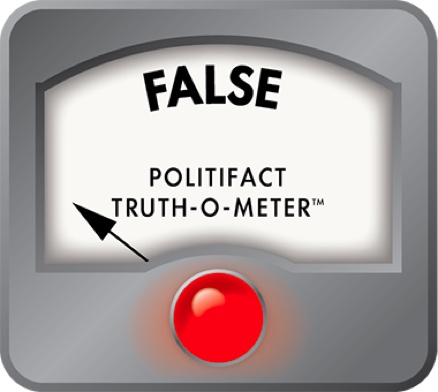
Walz said he took “responsibility for putting people in jail” in the Minnesota fraud scandal.
The work of federal investigators and prosecutors — not state officials — led to dozens of convictions in the Feeding Our Future scandal.
Reporting by media organizations in the state showed that Minnesota officials provided little or no evidence to federal investigators, who had to build a case from scratch, and that the state could have done more to aid the investigation.
We rate this statement False.
PolitiFact Researcher Caryn Baird contributed to this report.
