

Terry Gerton You have said that the federal ethics oversight system is fragmented, outdated and not fit for purpose. Tell me more about that particular diagnosis.
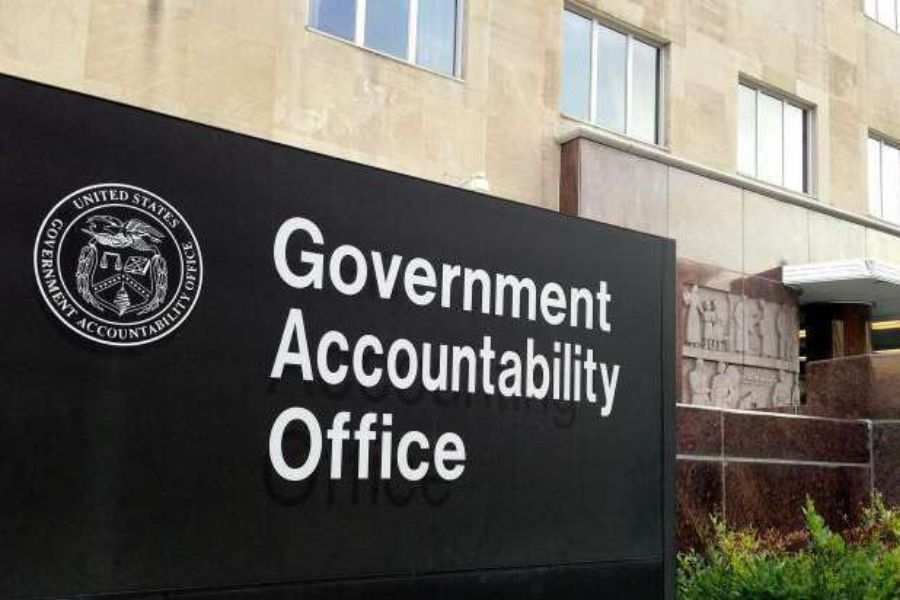
Omar Noureldin Well, Terry, that diagnosis came after Common Cause, the organization for which I work, filed 54 complaints with various federal ethics, accountability, oversight bodies a couple weeks ago. And in doing that, we realized that there were several violations that the Trump administration was engaging in, we believe they were engaging in, related to their political messaging during the government shutdown. And three different laws that we believe are implicated, the Hatch Act, the Anti-Deficiency Act, and the Anti-Lobbying Act, were all potentially being violated across eighteen different agencies that we could track. And each of those different violations needed to be filed with a different body. So you have the Office of Special Counsel, so we filed the Hatch Act violations with the Office of Special Counsel. Then there’s the Government Accountability Office where we filed the Anti-Deficiency Act violations, and then there’s the Office of Inspectors General at each of the different agencies where we filed the Anti-Lobbying Act violations. And the reason why I say this is not fit for purpose is that the nature of these violations were open, were blatant, were intentional, and were coordinated and systematic across the agencies, directed primarily by the White House and the Office of Management and Budget. And so our system was designed for things that were maybe not out in the open, that were government fraud, waste and abuse, that were happening behind closed doors. This is all out in the open, it’s all coordinated, and there’s celebration within the administration over the way that they’re talking about this message. And our system was not meant to deal with something like that.
]]>
Terry Gerton Well, let’s talk then about the complaints. You filed 54 separate complaints, as you mentioned, which seems to suggest a pattern of behavior as opposed to, as you say, an isolated misconduct. What does this tell you about how this messaging might have been coordinated, whether it was intentional, what’s behind it?
Omar Noureldin Well, some of the news reporting that we saw which made us look into this more closely was that there was messaging coming from the Office of Management and Budget to different agencies directing them to put these messages up on their websites, blaming the Democrats, or in some instances radical left democrats, for the government shutdown. Similar messaging was directed to agencies telling them to change the out of office replies of federal employees. So giving the appearance that that federal employee changed their out of office message to blame, quote, radical left Democrats for not allowing me to work, when in fact that this was something that was being directed from the White House to the political leadership of agencies and then forcing someone on the back end, IT folks, to go in and change these messages at such a large scale.
Terry Gerton So it seems as if the watchdogs who are supposed to identify misconduct were in fact co-opted from the beginning. Is that your finding?
Omar Noureldin In some instances, yes. Some of the offices of inspector generals which are housed within individual agencies, their websites were down and said they’re down because of the government shutdown. And so in those instances where I would have instead filed with the actual office of inspector general, I had to find random email addresses across the organization saying that, your website is down, so here I’m going to send a bunch of email addresses and hope that someone actually gets to read it.
Terry Gerton So those websites were actually down because OMB defunded the CIGIE, which manages all of the websites for the IG. So do you see an intersection of intent?
Omar Noureldin Exactly. Well, here it’s not only the blatant violations of these federal laws, but also the intentional dismantling of the system that is supposed to hold folks accountable to these laws. We saw that with the mass firings of inspectors general without the proper notice. And not to get us too far off the field, but the Supreme Court is now going to hear a case talking about the ability for independent agencies like the FTC, like the FCC, like the Fed governing board, whether or not the President has the ability to replace these folks without cause. And with the current system that the Supreme Court is embracing a unitary executive theory that allows for the President to have total and unbridled control of the executive cannot stand with a system that holds that same executive accountable.
Terry Gerton I’m speaking with Omar Noureldin. He’s senior vice president for policy and litigation at Common Cause. Well, let’s come back to the specific case that is at issue here. You mentioned three laws, the Hatch Act, the Anti-Deficiency Act, and the Anti-Lobbying Act. Explain how collectively those should have provided a safeguard to what happened.
]]>
Omar Noureldin Well, all three of those laws at their core or in their spirit are meant to prevent folks in the federal government and the executive branch from engaging in partisan political activity. So the Hatch Act talks about political messaging, the Anti-Lobbying Act talks about preventing grassroots lobbying, so talking about the ability for the federal government, the executive branch, to ask members of the public to vote a certain way. Here, the implication is that, do not vote for Democrats because they’re the ones who are radical and are closing down our government, when in reality, the Congress requires the entire Congress to vote. So if Republicans wanted to prevent a government shutdown, they would have come to the negotiating table with Democrats beforehand. And we know that the Trump administration and President Trump himself is the one that is directing congressional Republicans to vote a certain way. And now that we see folks like Marjorie Taylor Green speaking out against the current Republican strategy, folks from the White House are starting to attack her as well. And so what we’re seeing here is a total control, a lock grip, iron control of the congressional Republicans by the White House.
Terry Gerton You mentioned those three laws we just mentioned, and you also talked about a variety of oversight organizations making for a very complex web of oversight responsibility. Common Cause has actually advocated for a single independent watchdog with jurisdiction over the executive branch. Tell us what that proposal is, what it would need to be effective. What do you think the prognosis is for such a creation?
Omar Noureldin There’s a lot in that question. To start, the impetus behind calling for something more robust is a reaction to the current system, which as you mentioned, I’ve described as fragmented and not fit for purpose. And so here, what we are now moving into is a phase in our democracy where corruption is out in the open. We used to think that that was something that other countries did, that we were above all that. But now we’re seeing the sort of self-dealing by the President and the President’s family and the President’s allies and friends in a way that we didn’t think was possible or able to get away with for political reasons here, and that’s no longer the case. And so we need a system that is more robust that would allow the oversight agencies to initiate things on their own. Here, the political messaging was all over government websites. It was put into email replies that anyone could get. It wasn’t something that was behind closed doors. It didn’t need Common Cause to file 54 complaints in order to see what was going on. So we need now a system that is going to allow oversight agencies to affirmatively look at what’s right in front of their eyes and take action. Why do we need three different agencies with overlapping jurisdiction or distinct jurisdiction over laws that are all meant to get at the same thing? What’s the prognosis? I do think that the concerted effort that is being done by civil society, by good government groups, is really exposing this type of blatant and transparent corruption in a way that most American people are against. Most American people work really hard and play by the rules and believe in fairness. And what we’re seeing here is folks breaking the rules and engaging in things that aren’t fair. And so on the other side of this, I do believe there’s going to be a willingness and a momentum for a strong anti-corruption package that we’ll have to take a hard look. What are the specifics of that? I don’t know yet. We’re going to have to come together with folks who are both experts and folks who understand what is needed to rebuild trust of the American people in our government, because there isn’t that trust right now.
Terry Gerton Speaking of trust, it’s usually the assumption that the government is fairly neutral when it comes to the administration of policies. It’s not neutral necessarily in who’s running it, but certainly it should treat all of its constituents equally regardless of what their party is. This messaging is clearly not neutral. What impact does that have on citizen trust of government?
Omar Noureldin It erodes the trust. When folks believe that their government and the folks running their government are in it for their own political gain, their own, in these case, some of these cases, financial gain, then they don’t have the ability to trust that their government is looking out for them. And at its core, what government is supposed to do is work for the people. And when you have a administration, a President, a Congress, something similar is stock trading. I’ve spoken about this before. Members of Congress being able to use information they have about an entire industry or sector and then make individual stock trades about that before the rest of the public, then the public says, I’m electing you for what? For you to be able to increase your financial gain while the rest of us have to play by the rules? And so all of these things, whether it’s political activity, politicians engaging in mid-decade redistricting across the country so that they can ensure that they get to pick who their voters are rather than the voters getting to pick who their representatives are, all of these things are not isolated, and they all go towards eroding trust of the American people and government. And when they lack that trust, they don’t show up at the polls. They don’t show up to vote because, understandably so, they think, what does it matter? The system is stacked up against me, these politicians are not looking out for my benefit, and I have better things to do with my day than cast, in some instances, what folks believe to be a vote that doesn’t have meaning.
Terry Gerton In theory, the weaknesses in the system that you’ve articulated here could have enabled a President of either party to behave this way. So what do we need to do now to prevent this kind of behavior in the future, again, regardless of which party might hold the White House and the executive branch?
Omar Noureldin Well, right now, the biggest thing I think we can do is expose the grift, expose the way in which here the Trump administration and his allies in Congress are not looking out for the American people. What is being negotiated here is healthcare costs, is costs of everyday goods, and by showing that Trump would rather go and golf while the government is shut down than working around the clock to ensure that he’s doing everything he can to reopen the government, I think it’s pretty clear where his priorities lie. And so that’s the first step, is exposing the grift. The second step is coming together with a cross-ideological group of people who all say we have rules for a reason. Rules help us ensure that there’s fairness. Whether you’re a Democrat, a Republican, a conservative or progressive, we all want to play by rules that we can all agree on and we think are fair. So this isn’t about partisan spectrum, it’s about a spectrum between fairness and corruption. And that should be a cross-ideological, cross-partisan debate.
Copyright
© 2025 Federal News Network. All rights reserved. This website is not intended for users located within the European Economic Area.
