

A social media account that positions itself as an authority on the North Carolina General Assembly posted false information about the state’s driving laws — triggering a wave of inaccurate news online, and leading to an incorrect artificial intelligence-generated summary on a popular search engine.
The Facebook page — called “North Carolina Legislature” — posted that “Effective today, December 1, 2025, North Carolina has a new ‘Hands-Free NC Act’ that prohibits the use of wireless communication devices while driving.”
(Screengrab from Facebook)
The post, shared more than 3,000 times before being deleted, went on to claim: “Drivers cannot hold or use a device for tasks like texting or watching videos, though voice-activated technology and factory-installed navigation systems are allowed for most drivers.”
Similar claims were subsequently reported by a conservative pundit, a Charlotte-based television station and western North Carolina radio station. On Dec. 2, the day after the post, people who searched “Hands Free NC” on Google were shown an “AI Overview” saying: “‘Hands Free NC’ is the new law that went into effect on December 1, 2025, prohibiting drivers from holding or physically using a wireless device while driving, even at a red light.”
(Screengrab from Google)
The problem with these reports? There is no new law banning people from holding their cell phones while driving. And state lawmakers say despite the “North Carolina Legislature” Facebook page’s name, the account isn’t affiliated with the North Carolina legislature.
North Carolina law already bans motorists from sending text or email messages while driving. The “Hands Free NC Act,” a bipartisan bill filed in March, would allow motorists to be on the phone while driving — as long as they aren’t holding a phone in their hand.
However, the bill has not become law, nor has it come up for a vote in the state Senate or state House of Representatives.
Sometimes, legislators take a bill’s contents and put its provisions in a more popular bill that’s on its way to becoming law. That didn’t happen with the “Hands Free” bill’s contents, lawmakers say.
PolitiFact contacted the offices of Senate Leader Phil Berger, R-Rockingham, and House Speaker Destin Hall, R-Caldwell. We also contacted representatives for Insurance Commissioner Mike Causey, whose office oversees auto insurance regulations, and Attorney General Jeff Jackson. Their spokespeople said they were unaware of any new law banning people from holding their phone while driving.
“The ‘Hands-Free NC Act’ was never enacted by the General Assembly and is not in effect,” said Demi Dowdy, a spokesperson for Hall.
State Sen. Jim Burgin, R-Harnett, introduced the bill and told PolitiFact that he has received several phone calls about the Facebook post. Burgin said he regrets having to inform voters that his proposal never actually became law.
“Every day that I go back and forth to Raleigh, I see distracted driving,” Burgin said in a phone interview. “At a red light, [when the light turns green] the traffic starts moving and they don’t move and their heads are down — you know what they’re doing. They’re looking at their phone.”
The North Carolina Alliance for Safe Transportation, a nonprofit organization that advocates policies that make traveling safer, issued a statement about the Facebook post, saying that it was inaccurate.
“The lesson with this social media post is mistakes happen, which is also the reason motorists should avoid distractions and focus on driving when behind the wheel,” Joe Stewart, the alliance’s board chairman said in a statement.
A PolitiFact reporter messaged the “North Carolina Legislature” Facebook page, which says it is “managed by unpaid volunteers.” We asked for the source of the page’s claim about the “Hands Free NC Act,” but page administrators didn’t provide an answer.
Our ruling
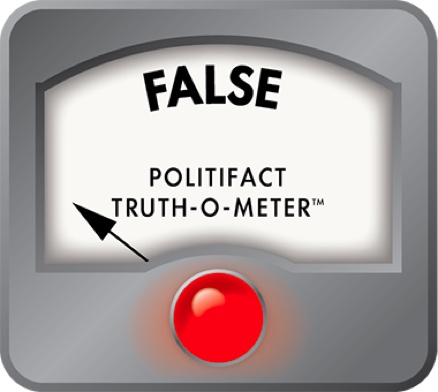
A Facebook post said the “Hands-Free NC Act” went into effect Dec. 1 and “prohibits the use of wireless communication devices while driving.”
The bill never got a vote in the General Assembly and its contents weren’t enacted into law as part of any other bill. We rate this claim False.
