

President Donald Trump has repeatedly said former President Joe Biden signed pardons with an autopen, a mechanical device that uses a robotic arm with an attached pen. When Trump installed portraits of past presidents in the White House, a photograph of an autopen took the place of Biden’s portrait.
On Dec. 2, Trump declared Biden’s pardons, and other actions signed with an autopen, invalid.
“Any and all Documents, Proclamations, Executive Orders, Memorandums, or Contracts, signed by Order of the now infamous and unauthorized ‘AUTOPEN,’ within the Administration of Joseph R. Biden Jr., are hereby null, void, and of no further force or effect,” Trump wrote on Truth Social. “Anyone receiving ‘Pardons,’ ‘Commutations,’ or any other Legal Document so signed, please be advised that said Document has been fully and completely terminated, and is of no Legal effect.”
Legal experts previously told PolitiFact that the U.S. Constitution doesn’t require presidents to directly sign pardons. Using a mechanical device for signatures is not prohibited and there is no constitutional mechanism for overturning pardons, they said.
“There is no viable way for the Justice Department to try to revive any impacted criminal charges against pardonees,” said Bradley Moss, a Washington, D.C.-based lawyer.
At a minimum, Trump would need to use a more formal process to try to undo Biden’s pardons — and then prevail in what would likely be strong legal challenges.
“It is well settled that once there is a pardon, no one — not any president or Congress or the courts — can undo it,” said Michael Gerhardt, a University of North Carolina law professor.
When we contacted the White House for comment, a spokesperson pointed us back to Trump’s Truth Social post.
Trump’s focus on autopen use
In March — after Trump allies commented on how similar Biden’s signature appeared across different official documents — Trump turned his attention to Biden’s pardons of lawmakers and others involved with the committee that investigated the Jan. 6, 2021, U.S. Capitol attack.
The allegation by Trump and his supporters that anonymous aides issued pardons without Biden’s knowledge dovetailed with concerns about Biden’s mental and physical decline at the end of his term, when he was 82 years old, worries that forced him to quit his reelection bid.
In a June interview with The New York Times, Biden called Trump and other Republicans “liars” for saying he didn’t know what he was signing, and for alleging that someone other than him had made the decisions.
Biden told The Times he had orally granted all the pardons and commutations issued at the end of his term.
“I made every decision,” he said, adding that he worked with staff to use an autopen as a way of speeding the process because “we’re talking about a whole lot of people.”
Precedent for pardons without a president’s handwritten signature
The U.S. Constitution’ section on pardons does not mention the words “sign” or “signature,” and former presidents Barack Obama, John F. Kennedy and Thomas Jefferson are among those known to have used mechanized signing devices.
“The president possesses the power to pardon, but there is no specification (unlike for signing of bills) that this pardon be in writing,” Bernadette Meyler, a Stanford University scholar of British and American constitutional law, said in a March email to PolitiFact.
Dan Kobil, a Capital Law School professor, said presidents “historically have not personally signed grants of pardons for every individual they granted clemency to,” notably when granted in large batches such as mass amnesties following wars.
Government memos from 1929 and 2005 also supported using an autopen.
In 2005, during George W. Bush’s presidency, the Justice Department’s Office of Legal Counsel wrote a memo that said: “The President need not personally perform the physical act of affixing his signature to a bill he approves and decides to sign in order for the bill to become law. Rather, the President may sign a bill within the meaning of Article I, Section 7 by directing a subordinate to affix the President’s signature to such a bill, for example by autopen.”
How could Trump’s vow to cancel Biden’s pardons play out now?
Potentially reversing pardons would have to begin through a formalized process, not a Truth Social post, legal experts said. Federal authorities would have to rearrest people who had been convicted and pardoned, or try or retry those who hadn’t been charged or convicted.
If the government did any of those things, the defendants could sue, and would have some significant legal cards to play.
In an 1869 ruling, a federal court wrote: “The law undoubtedly is, that when a pardon is complete, there is no power to revoke it, any more than there is power to revoke any other completed act.”
If Trump revoked someone’s pardon, that person “could argue that they have been validly pardoned, and the judge could dismiss the claim then and there,” Michigan State University law professor Brian Kalt said. The Justice Department “would have to prove that Biden did not authorize the pardon.”
That would be the longest of courtroom long shots, said Frank O. Bowman III, an emeritus law professor at the University of Missouri, because Biden has said he intended to issue the pardons.
“To me, that’s the end of the story,” Bowman said.
History is sprinkled with a few examples of presidents revoking their own pardons before they went into effect, Kobil said. But those about-faces were thanks to a change of heart, not because a subsequent president invalidated them.
Our ruling
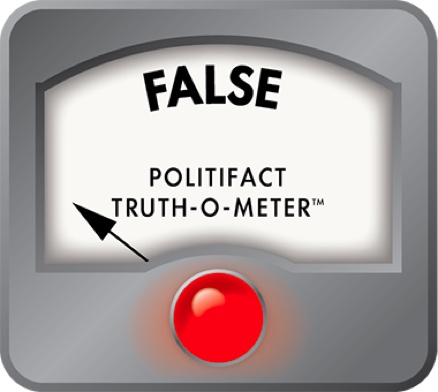
Trump said any pardon signed by an autopen is now “fully and completely terminated, and is of no legal effect.”
Trump cannot unilaterally make that happen.
Legal experts said the Constitution doesn’t require presidents to directly sign pardons or ban using a mechanical device for signatures. There is no constitutional mechanism for overturning pardons.
Revoking a prior president’s pardons would be unprecedented, and if people’s pardons are revoked, they could challenge the revocation in court, with legal precedent on their side.
We rate the statement False.
