

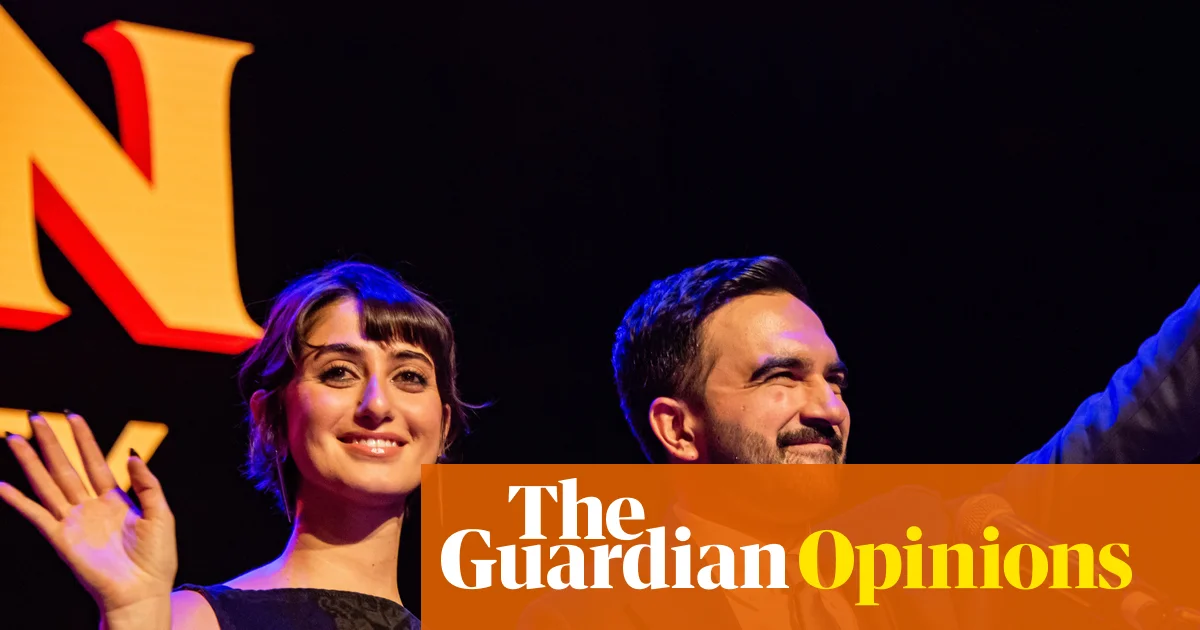
I’ve been visiting New York for the better part of 20 years as a political consultant, on my way to and from election campaigns elsewhere in the United States. Being there for the historic NY mayoral elections this week, I was struck by how abuzz the city was with political energy – not seen since Barack Obama’s 2008 campaign.
Mayoral races usually pass unnoticed – yet this one gripped the nation: a contest between the old and new Democratic party, embodied by former New York governor Andrew Cuomo and first-term Queens councillor Zohran Mamdani.
The race dominated headlines since the improbable rise of Mamdani, a self-described Democratic Socialist, and Cuomo’s shock defeat in the Democratic primary. More than US$90m was spent by candidates and super Pacs – the most expensive race for Gracie Mansion in New York history.
So what lessons are there in Mamdani’s win for strategists here in Australia?
To examine the ascension of Mamdani and the downfall of Cuomo, you could not find two more contrasting political campaigns.
Across the five boroughs it was a contest between the old and new: age, campaign strategy and voting base. It was a battle of David versus Goliath, if Goliath had a string of sexual harassment allegations hanging over his head.
A clearly unpopular Cuomo dusted off a traditional mainstream, cash-rich playbook of the past 20 years: devoid of any meaningful offering to voters but heavy on traditional television commercials, paid digital advertising, endorsements from labour unions and Democratic leadership, and all paid for by wealthy donors.
Sign up: AU Breaking News email
His cardinal sin was taking his opposition for granted.
The opposition came in the form of Mamdani, who built his movement on small-dollar donations and a promise to ease the cost of living in the nation’s most expensive city. His pitch – free bus fares, childcare, rent freeze and cheaper groceries – resonated with younger New Yorkers.
Mamdani’s message of economic salvation spread through organic digital content. From Saturday Night Live’s Bowen Yang to model Emily Ratajkowski, popular figures amplified his call for change. His campaign’s storytelling – authentic, shareable and inexpensive – drowned out Cuomo’s multimillion-dollar ad blitz.
For political strategists in the US and back home in Australia, it is a blunt lesson: sharable, story-based digital content can beat traditional paid advertising.
On the ground, the energy was palpable. New Yorkers hungry for something new poured into the campaign. By election day, the campaign had recruited more than 100,000 volunteers – a grassroots movement that overwhelmed its rivals. Cuomo’s team scrambled to respond, funnelling over US$20m into a last-minute field operation. It was too little, too late. You can’t microwave a ground campaign.
For Australian progressives, Mamdani’s victory offers both inspiration and caution. His campaign showed that addressing voters’ daily problems with meaningful ideas, communicated with storytelling and an energised volunteer base, can cut through more powerfully than a stack of paid TV and digital ads.
Voters respond to ideas that are quickly conveyed, simple to understand and just seem to make sense.
America’s voluntary voting system makes turnout everything, while in Australia the challenge isn’t getting people to the polls, it’s giving them a reason to care. That same sense of optimism and movement-building can still resonate here, not to drive turnout but to rekindle belief.
This is good for democracy.
What translates less well is the lure of extreme policy offerings that promise to upend the system entirely. We saw how that kind of politics can backfire, when Donald Trump became a millstone around Peter Dutton’s neck at the last federal election. The lesson for us isn’t to campaign to tear down the system, but to channel that appetite for bold ideas into credible, hopeful reform. Mamdani will confront this challenge from 1 January.
Stephen Donnelly is a Melbourne-based community organiser and electoral campaign consultant at Dunn Street. He hosts a weekly politics and campaigns podcast called Socially Democratic. He is a former assistant secretary for the Victorian Labor party
