

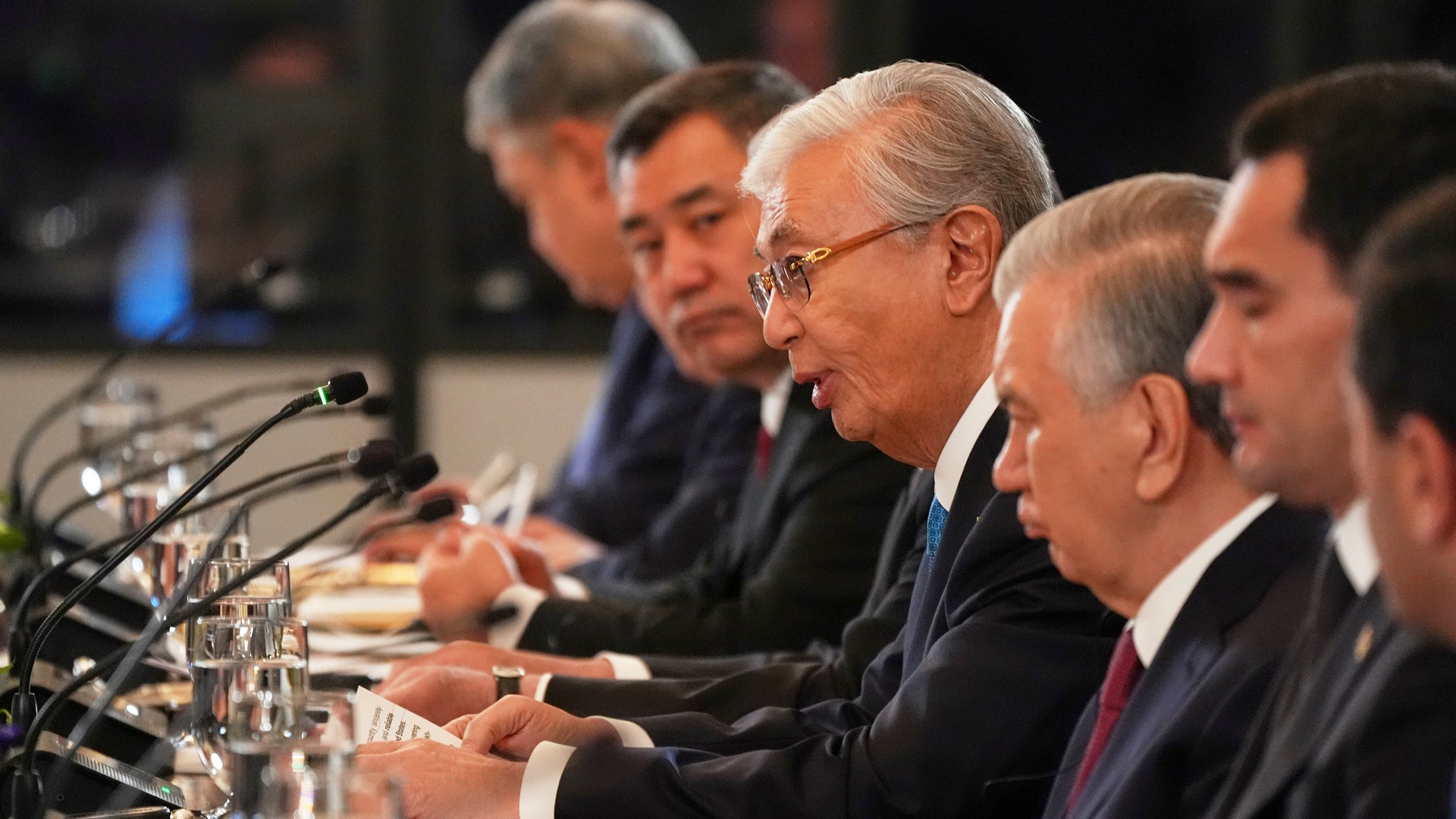
Many observers raised a skeptical eyebrow last week when U.S. President Donald Trump announced that Kazakhstan, the former Soviet republic in Central Asia, had decided to join the Abraham Accords. The move, they argued, had no significance. They were wrong.
The Abraham Accords—which normalized relations between Israel and the United Arab Emirates, Bahrain and Morocco—is not only a redesign of the diplomatic architecture of the Middle East. It is also an important focus of U.S. influence in a vital region, and that’s where the significance of Kazakhstan’s decision lies.
By joining the Washington-centered pact, Astana is drifting further away from Moscow at a time when the Kremlin is engaged in a high-stakes campaign to secure its position in its Soviet-era sphere of influence, amid challenges from a range of competitors. That contest has intensified enormously since Russia’s all-out invasion of Ukraine in 2022.
