

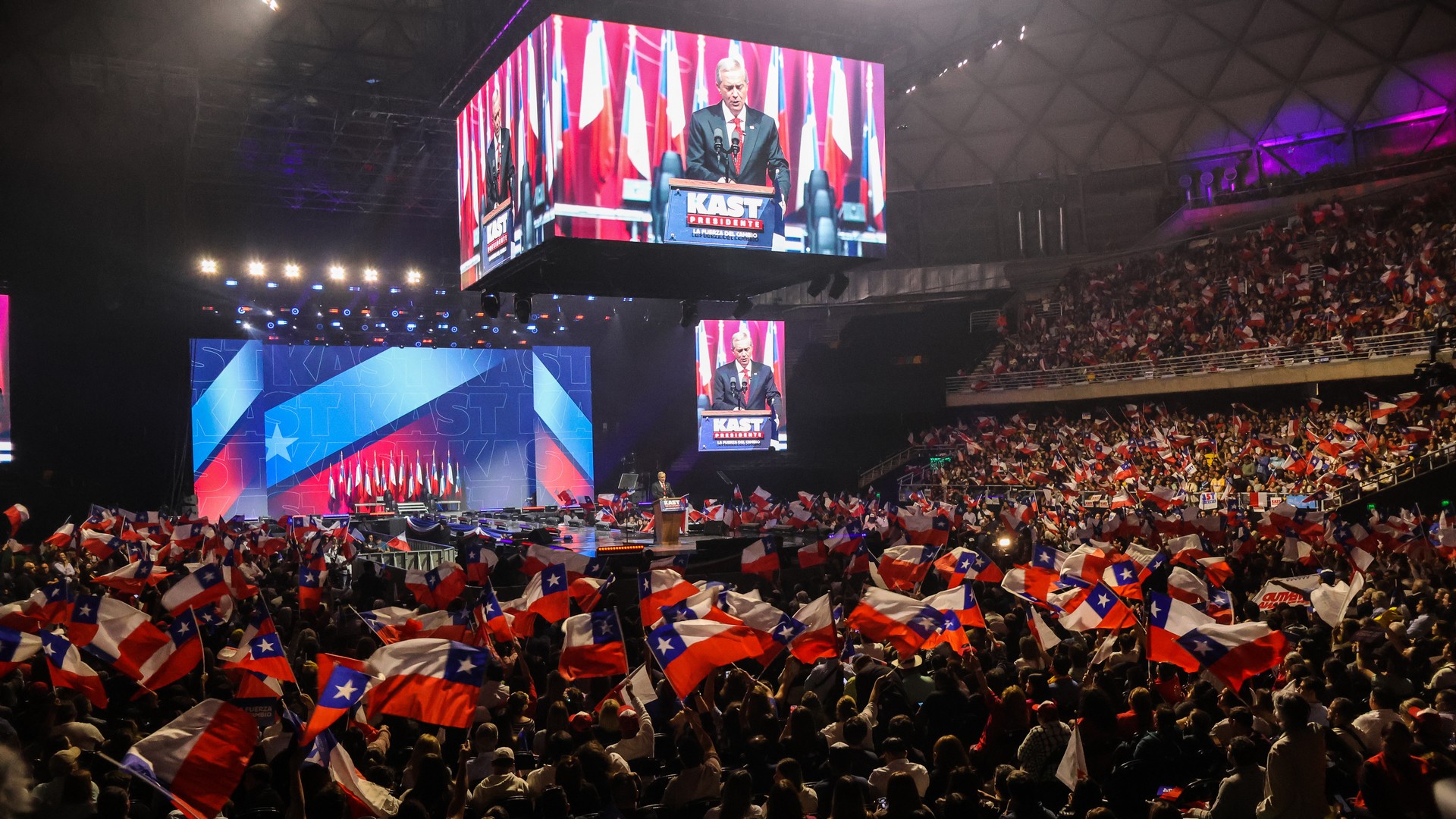
A great deal of well-deserved international attention is trained today on the U.S. military escalation near Venezuela’s Caribbean coast. At the same time, however, a major development in the region is unfolding largely below the radar of global interest: Latin America is in the throes of a dramatic political shift, with voters in multiple countries moving decidedly to the right, disenchanted with the performance of leftist governments.
The latest evidence of this ongoing process came last Sunday, when Chilean voters went to the polls to choose a replacement for President Gabriel Boric, who is constitutionally banned from pursuing a second consecutive term but would likely be defeated were he able to run.
Although Boric’s ally, Jeannette Jara of the Communist Party, finished in first place with 27 percent of the vote, she is all but certain to lose the Dec. 14 runoff to the second-place finisher, the ultra-conservative Jose Antonio Kast, who won 24 percent of the vote. That’s because some 70 percent of voters supported right-wing candidates. Third place in Sunday’s contest went to Johannes Kaiser, even further to the right than Kast.
