

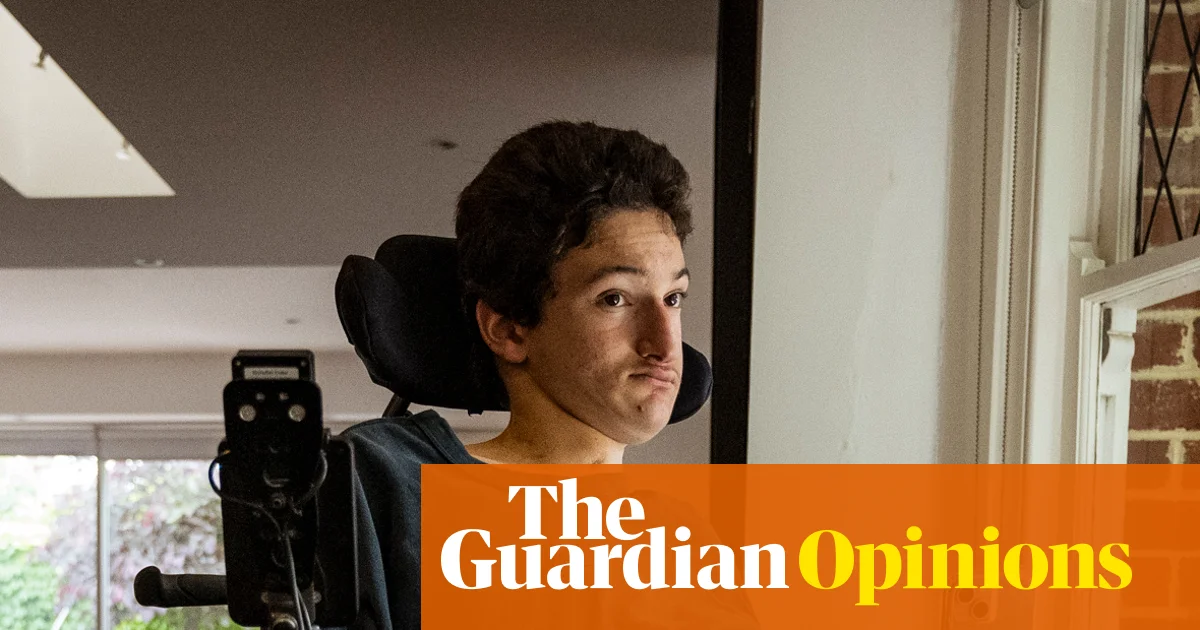
The government has decided that from Wednesday I should be banned from social media because of the potential harm it can cause. But as a teenager with a severe disability, who relies on social media for connection, community and access to a largely inaccessible world, this policy actually has the potential to create further harm.
When I was 12, I was diagnosed with Hodgkin’s lymphoma, which triggered a rare nerve condition that has paralysed me. My preteen years were spent in an ICU ward, on a ventilator, going through chemotherapy. Before I got sick I did not have any social media. It turned out that all I had to do was end up in a coma, because when I woke, I had a new iPhone14, with every accessibility feature. Having Instagram and Snapchat made me feel less disconnected. I had a window into the outside world, and my friends had a window into my world between hospital visits.
Social media is a powerful thing, especially for teenagers transitioning into adulthood. And I understand why there is a need to restrict it or monitor it, especially for children and young teenagers. As clinical psychologist Dr Rachel Same has pointed out to me in response to questions on this topic, “current evidence does not establish a clear cause-and-effect relationship between social media use and the physical or mental health of children and adolescents”.
If banning social media for kids under 16 is a response to a mental health crisis among young people, shouldn’t it consider all young people? What about those who are isolated? Those who are in hospital or managing a chronic health condition or disability that means they can’t participate in the world in the same way as other teenagers their age?
Even now, as I come to terms with life as a quadriplegic, Instagram and TikTok offer videos, accounts and communities to remind me that I’m not alone. I follow my footy team, I even DM with some of the Carlton boys before and after games, I follow the NBA and my favourite basketball accounts, and have started my own movie account where I review and rate movies. It’s not my behaviour online that’s the issue here, yet it is kids like me who are being punished.
Ezra Sholl and his mother Natasha interact with Ezra’s Instagram page. Photograph: Christopher Hopkins/The Guardian
What we need is regulation and consequences. Whenever I have reported an account or comment for hate speech or bullying, my report has made no difference. The comment remains, the account still exists, and it’s up to me to block and move on, while that person or bot continues to spread hate. What responsibility do the platforms themselves owe to users? If tech companies have the capability to delete accounts for people under the age of 16, they also have the capability to delete accounts that bully, harass or cause harm. Banning social media for young people doesn’t actually solve the problems at the crux of this issue. Does the government not realise that bullying and trolling will continue on unregulated apps like WhatsApp, Roblox, Discord and probably many others that will pop up in the next few months to fill the gap that Instagram, Snapchat and TikTok have left?
It’s not my behaviour online that’s the issue here, yet it is kids like me who are being punished
Dr Same agrees. “The focus on banning specific platforms based on social interaction, rather than actual risk, is likely to overlook where dangers lie,” she says. “In some cases, the ban could even increase risk. Children are likely to miss out on the opportunity to learn how to use social media safely and responsibly with appropriate adult guidance. If they begin using it secretly, they may be less likely to seek help or tell their parents if they encounter a predator or harmful situation. The ban could push children toward less regulated or underground platforms, where harmful content is more difficult to monitor.”
The federal communications minister, Anika Wells, said the ban was about protecting children. In a world that has already become largely inaccessible and very small, I’d like to invite the minister to spend a day with me, and let me know how reducing social media access and making my world even smaller protects me or kids like me.
