

Monday marked the start of World Antimicrobial Resistance Awareness Week, recognizing what may be the greatest threat to human health—which starts at birth. The World Health Organization (WHO) recently reported that 1 in 6 infections are caused by to resistant pathogens, and antimicrobial resistance (AMR) is now implicated in up to one-third of all newborn deaths from infection.
Ten years after the WHO was mandated to raise global awareness of AMR, surveillance has improved, but the response has stalled. Despite its clear connection to pandemic risk, AMR was sidelined in the WHO Pandemic Agreement that was adopted in May. The organization’s approach is reductive, often focused on development of new antibiotics, which have failed to keep pace. The last-resort drugs that exist are largely unavailable in the countries that need them most.
Furthermore, this narrow framing ignores the realities of fragile health systems where conflict, attrition of skilled clinicians, collapsing infrastructure, and lack of sanitation leave antibiotics as the default substitute for basic health care.
In Gaza, for example, where bombardment has destroyed hospitals, water plants, and power supplies, the effect is catastrophic. The under-5 mortality rate in the enclave has risen more than tenfold since 2023; around 55 percent of those deaths are newborns. With sterilization equipment, antibiotics, and even chlorine deliberately withheld from Gaza, infection control has collapsed—creating ideal conditions for highly resistant pathogens and spread of so-called superbugs.
Though universal vaccination in many countries has sharply reduced deaths in children under 5, neonatal mortality, or death within the first month of life, has fallen far more slowly. Unlike the two other major causes of these premature deaths—preterm complications and events during childbirth—infections such as sepsis, pneumonia, and meningitis stand out as largely preventable. Neonatal sepsis alone is estimated to strike more than 5 million babies and kill around 800,000 each year.
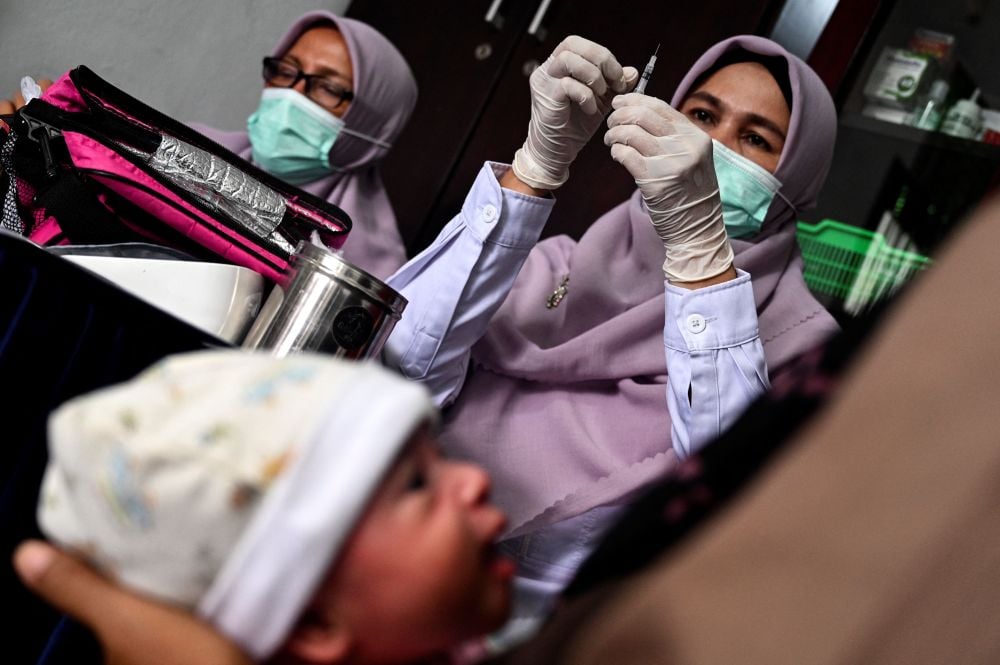
Yet compelling new research points to a practical intervention: the century-old Bacille Calmette-Guérin (BCG) vaccine, which is cheap, safe, and widely available. Evidence from multiple randomized trials shows that the BCG vaccine given within 24 hours of birth cuts infection-related deaths nearly in half, including those due to drug-resistant pathogens. But most of the around 100 million infants targeted for the vaccine receive it weeks or months after birth.
That delay costs hundreds of thousands of lives and is accelerating the silent pandemic of AMR.
The BCG vaccine was developed in 1921 to fight tuberculosis, so repurposing it against neonatal sepsis may initially sound implausible; tuberculosis develops slowly and rarely kills infants, after all. But though BCG provides modest protection against tuberculosis, it is now clear that it strongly stimulates the immune system to defend against a broad range of pathogens responsible for most neonatal infections.
That BCG’s protection extends beyond TB was first observed by one of its inventors, Albert Calmette, who found and reported in 1931 that mortality in BCG-vaccinated infants declined by an astonishing 75 percent. However, these remarkable findings were not pursued until the late 1990s, when researchers in Guinea-Bissau confirmed that BCG-vaccinated infants had far lower overall mortality than could be explained by tuberculosis prevention alone.
Subsequent randomized trials showed that BCG vaccines given at birth reduced neonatal deaths by about one-third, mainly by preventing fatal infections. Coined beneficial “nonspecific effects,” these results were supported by immunological studies showing that BCG trains the innate immune system—the body’s first line of defense—to respond faster and more strongly to pathogens.
This is especially relevant to newborns, whose immune systems are naturally suppressed in utero to avoid maternal attack. Preterm and underweight babies are even more vulnerable, born with immature organs and underdeveloped immune responses. In modern conflicts, the risks multiply: Maternal malnutrition, reduced access to prenatal care and emergency delivery, increased exposure to infection, and chronic prenatal stress increase rates of preterm and low-birthweight babies. (According to UNICEF, 1 in 5 babies in Gaza is born prematurely or underweight.)
Now, the largest randomized trial to date provides unequivocal evidence for BCG’s beneficial nonspecific effects. Published in the BMJ, this study in India enrolled more than 5,000 very frail newborns, many born too early and all weighing less than roughly 4.5 pounds. Under WHO guidance, such infants are usually considered too fragile to be vaccinated at birth, which can delay vaccination well beyond the first month.
Among the control group, 1 in 10 babies died within a month. But those who received the BCG vaccine at birth had 17 percent lower overall mortality. Almost half of deaths in unvaccinated infants were due to infection, but BCG vaccination nearly halved that risk, meaning that vaccinating just seven infants would save one life. The benefit within the first 72 hours suggests that the BCG vaccine may not only prevent a hospital or community-acquired infection but stop the development of sepsis contracted during delivery.
The WHO has not caught up with this evidence, even though its own 2016 review acknowledged that BCG vaccination reduced overall mortality beyond that expected from reducing tuberculosis and recommended universal administration of the BCG vaccine at birth in 49 countries where tuberculosis is prevalent. Due to the current WHO guidance, though, the most vulnerable babies—those born preterm or underweight—are the least likely to be vaccinated. In sub-Saharan Africa, around 14 percent of babies are born underweight; in South Asia, that figure is 25 percent.
The WHO’s monitoring also lags behind the science. BCG vaccination is also most effective in preventing childhood tuberculosis deaths if given at birth. Yet the WHO measures BCG coverage only at 12 months, which falsely implies timely administration. If coverage were measured at one week, health care workers would be motivated to deliver it early, maximizing its lifesaving potential against tuberculosis and other infections. (Many health care workers, to avoid wastage, wait to administer the BCG vaccine until at least 10 babies are available to use a typical 20-dose vial.)
Moreover, correct technique matters. Most vaccines—influenza, tetanus, COVID-19—are administered intramuscularly; some, such as measles, MMR, and chicken pox, must be given subcutaneously. The BCG vaccine is unique in that it must be given intradermally, leaving a small bleb—a papule that leaves a scar—when done correctly, which indicates successful immune reaction. Among children vaccinated with BCG, those who develop a scar have 39 percent lower mortality than those who do not develop a scar. In places with untrained vaccinators, as few as half of vaccinated children develop one.
Additionally, not all BCG strains are equal: There is a considerable variation in the immunogenicity of different strains to protect against tuberculosis and induce trained immunity. Only the Danish and Japanese strains reliably induce trained immunity; the Russian strain, still used in parts of Asia, shows little or no nonspecific protection, as demonstrated in another Indian trial. Ensuring use of high-potency strains is essential to avoid discrediting this vital tool.
Simple policy changes could save countless newborns around the world: The WHO should state clearly that all babies—including preterm, fragile, and underweight infants—should receive the BCG vaccine at birth. Vaccinators should open a BCG vial even for a single child. Coverage should be assessed at one week and a scar check added at six weeks.
Beyond updating WHO guidance, national immunization programs and donors need to act. Ministries of health, supported by global health organization Gavi and UNICEF, should classify BCG as an essential at-birth vaccine, delivering it within 24 hours alongside the polio and hepatitis B vaccinations. Midwives, primary health care practitioners, and pharmacists should be trained in BCG vaccination. Funding mechanisms should reward early rather than overall coverage, and procurement policies should prioritize the Danish and Japanese strains. New delivery systems, such as patches or oral formulations, should also be pursued.
In short, implementation policy must catch up with evidence. The WHO’s Global Antimicrobial Resistance and Use Surveillance System (GLASS), which tracks resistant infections and antibiotic use worldwide, should also monitor how at-birth BCG vaccination reduces neonatal sepsis and deaths from drug-resistant pathogens, linking immunization and lab data to demonstrate how trained immunity helps curb AMR.
The latest GLASS report rightly identifies AMR as one of the world’s most urgent health threats but overlooks the role of conflict and the untapped potential of the BCG vaccine to strengthen innate immunity and curb resistance.
In conflict areas and beyond, BCG vaccination could be transformative. War zones are now factories for drug-resistant infections: After 2022, for example, Poland reported that more than half of its multidrug-resistant or rifampicin-resistant tuberculosis patients were Ukrainian. Across Europe, carbapenem-resistant Klebsiella pneumoniae infections are climbing, exactly the pathogen profile seen in blast-injury wards and crisis ICUs. Remarkably, the Indian trial showed significantly fewer Klebsiella infections among vaccinated newborns, suggesting that BCG’s nonspecific immune training may blunt the impact of resistant infections.
Because BCG is safe and effective even in preterm and low-birthweight infants, it is particularly well-suited to conflict zones. Despite severely restricted humanitarian access, the threat of vaccine-derived polio outbreaks in underimmunized populations can still be leveraged for polio vaccination programs.
The added danger of superbugs and other pathogens resistant to last-resort antibiotics strengthens the case for giving BCG at birth, too. When antibiotics fail, they fail everywhere, triggering concurrent pandemics of drug-resistant infections. A newborn with an AMR infection is not only more likely to die but also poses a threat to others, locally and globally.
Even with foreign aid paralyzed in the wake of the White House’s dismantling of the U.S. Agency for International Development (USAID), the BCG vaccine remains one of the few feasible and high-impact interventions available: cheap, cost-effective, and easily paired with the oral polio vaccine at birth.
Economically, the case is unassailable: The BCG vaccine is cheap enough to fold into existing immunization budgets or even the Global Polio Eradication Initiative. Including delivery, cold chain, and staffing, the total cost per dose is less than $2, making the price of preventing a single newborn death from sepsis less than $25. Few public-health interventions deliver that kind of return.
At the U.N. General Assembly in September, the review of progress toward the 2030 Agenda for Sustainable Development was notably silent on ending preventable neonatal deaths. The omission suggests an unwillingness by the WHO and other U.N. health agencies to face how far off-track the world is from meeting its goals—and to confront the consequences of the destruction of USAID. The fact that the United States has left the WHO should not be an excuse for inaction; making these policy adjustments requires no sign-off from Washington.
Repurposing the BCG vaccine offers a rare win-win for global health. It could push the world toward the neonatal mortality target set by the U.N.’s 2030 agenda—saving half a million newborns each year—while combating AMR. After decades of failing to crack neonatal mortality, it turns out that the means to eliminate needless newborn deaths has been in our hands all along. Now we just have to use it.
