

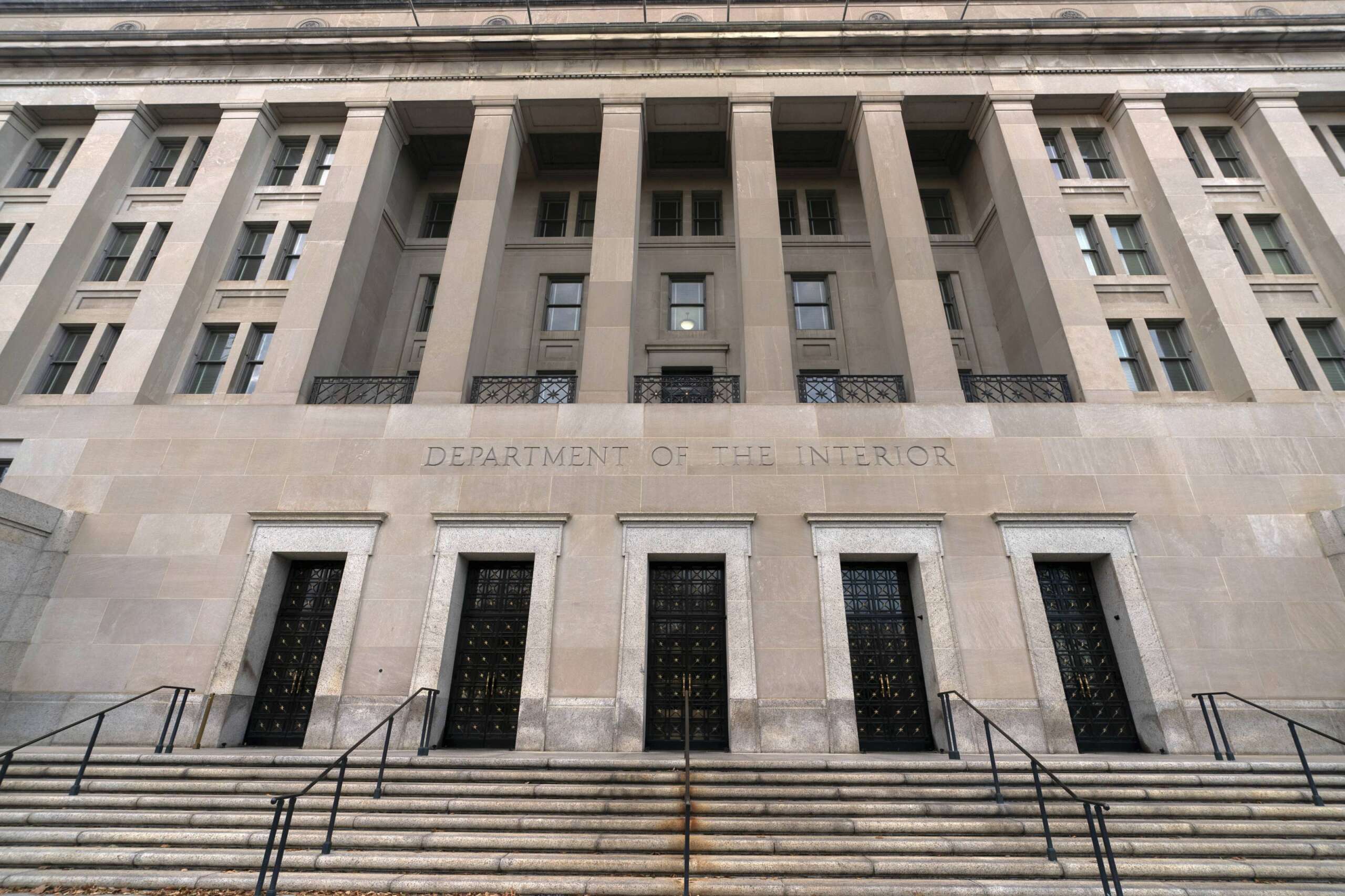
The federal offices are back open and hundreds of thousands of federal workers have returned to work after the longest shutdown in history. But nothing is back to normal — federal workers say morale and trust in leadership are at an all-time low, tensions are high between furloughed staff and those who worked through the shutdown, schedules are slipping and projects are being pushed back, and more people are accelerating their retirement plans or leaving federal service altogether.
The recent shutdown, however, has just exacerbated the existing problems and added to what federal workers described as an already extremely trying year for the federal workforce.
“As if morale wasn’t already non-existent, it sure is now. I expect a surge of people to (quiet) quit and I expect the remaining players to be bombarded with work with no support or guidance from leadership,” one employee told Federal News Network.
“The mission is dead. Operations are barely running. Morale is toast,” another federal worker said.
]]>
“Everything about being a federal employee in 2025 has destroyed workforce morale — from constant [reduction-in-force] threats, to losing colleagues to early/forced retirements and firings, to the loss of any telework to facilitate work/life balance for working parents or senior caregivers, this is the worst professional year I have experienced in nearly 20 years of service to my country. Nothing about the current [Office of Management and Budget] approach to leadership has moved our country forward,” another employee said.
A Federal News Network survey, conducted Nov. 17-30, asked federal workers what it has been like going back to work after the 43-day government shutdown. Survey respondents were self-selected, and they self-reported information to verify their status as current federal employees.
Federal workers described the experience as disorienting — returning to thousands of unanswered emails and scrambling to catch up with partners who kept work moving during the shutdown. There was little to no guidance from top management; they reported overwhelming backlogs and project schedules going completely awry.
Many said overloaded or outdated IT systems, lapsed system access and computer issues made even basic tasks difficult.
“IT issues as devices are set to expire and become inactive after 30 days of non-use, supervisory chain is still not back to work and others are catching up on leave. There are large gaps within the higher chain of command, tremendous amount of confusion, no clear description of how to verify back pay and related deductions are accurate, statutory deadlines did not stop during the shutdown, so crushing workload to return to,” one employee said on Nov. 24.
“It is not so simple as flipping a switch. We are still waiting on funds to arrive and are unable to work on things until those funds arrive,” another federal worker said on Nov. 18.
“I engage in very technical work. A 1.5-month shutdown has thoroughly derailed my train of thought. It will take a long time to refamiliarize myself with what issues were being sorted out, what solutions I had been pursuing, even how any of my own code works,” another employee said.
]]>
Several federal workers said their agencies could face budget cuts due to not hitting mandatory spending benchmarks — goals that are “impossible to achieve” after a 40-plus day lapse in appropriations.
In addition, many employees now have to use their ‘use-or-lose’ annual leave before the end of the year, which will further delay progress and extend timelines.
Out of 739 federal workers, nearly 47% of respondents said it would take them more than two weeks to catch up on all the work missed during the shutdown.
“My program was halted immediately, but will take two months to ramp back up,” one worker said.
“Can you really ever catch up? Some work will just be lost — deprioritized in the chaos,” another federal employee said.
And the threat of another shutdown is looming — the bill President Donald Trump signed into law keeps the government open only through Jan. 30. The uncertainty, workers say, is making people reluctant to fully dive back into work.
“With holidays coming, this will set projects back months,” one employee said.
Federal employees who worked during the shutdown also expressed “apathy and annoyance” toward furloughed employees who did not work during the shutdown, saying the resentment has led to conflicts and made collaboration difficult.
“Expect operations to be negatively affected as the furlough has driven a wedge between those furloughed employees and those who remained on the job,” one federal employee said.
]]>
Receiving back pay
Most of the federal workers worked without pay during the shutdown, missing more than four weeks of pay.
When the government reopened on Nov. 13, the Office of Personnel Management said it would take several business days for workers to get their back pay.
Out of 728 respondents, 200 federal workers — about 27.5% — said they received their back pay within one to three days after returning to work. Another 200 said they were paid within four to seven days. For the remaining 323 individuals, it took more than a week to receive their back pay.
Many employees told Federal News Network that there was a lot of confusion about how to process timesheets and guidance changed a few times the first two days, which had contributed to the delay in issuing our pay.
“Smithsonian still has not managed to get us paid. They are wasting time making sure everyone has the correct time codes rather than getting people paid. It’s more important to them that they take a couple weeks to record we were furloughed. Can’t pay the mortgage, but at least they’ll have the correct time code,” one employee said on Nov. 22.
One Interior Department employee told Federal News Network on Dec. 1 the agency had only paid them for 72 hours worked during the shutdown and had promised the remainder by Nov. 25 — they are still waiting on that payment. They added that none of the 69 civilian employees at the U.S. Park Police have been fully paid. Sworn officers, however, received a flat 80 hours per pay period, and while overtime and night-differential corrections were made, it’s not clear if that pay had been issued.
“We have not heard anything about when we will be paid beyond the deadline that passed a week ago, no reason has been provided to explain the delay,” the employee said. “I will be retiring early. While not the only reason, the recent hijinks played a role in my decision.”
One employee at INTERPOL Washington told Federal News Network on Dec. 1 that personnel there have received only partial back pay and some employees have only received pay for one pay period. The issue stems from the Justice Department’s decision to dismantle INTERPOL Washington and fold its remaining functions into the U.S. Marshals Service during the shutdown — while making changes in the pay system while payroll processing was underway.
The workers were initially told they would receive all of their back pay on Nov. 21, but instead received partial pay on Nov. 24. DOJ then promised the rest by Nov. 28, but only a handful of people were paid over that weekend. The agency now says it has finally identified the problem and that employees should be paid by Dec. 3.
“Every time that the DOJ claims to find a solution and puts another date out for when we should get paid, there is just another disappointment,” the INTERPOL Washington employee said.
Another Air Force civilian at Lackland Air Force Base, who was told they would be paid last week, is still waiting for their back pay now nearly three weeks after the shutdown ended. On Monday, they were told that “the comptroller Squadron is working diligently to manually process over 3000 timecards with an estimated completion date of Nov. 29.”
For many of those who received back pay, determining whether the amount was correct was nearly impossible.
Dozens of respondents said they were unsure if their payments were accurate because agencies did not issue accompanying paystubs for the affected pay periods. Several employees said since payroll providers such as the Defense Finance and Accounting Service do not provide leave and earnings statements for retroactive pay, meaning they will have to wait for the next pay period to verify whether the amount is correct.
“It seems to be off by a few hundred dollars, but I can’t determine where the discrepancy is,” one federal worker said on Nov. 26.
“We don’t know since it was a partial payment with no documentation,” another respondent said on Nov. 24.
“Many people at work say that their paychecks were less due to taxes on lump sum payouts,” another respondent said on Nov. 25.
More feds eyeing the exit
Federal workers were already overwhelmed, stretched thin and struggling with high levels of anxiety following the Trump administration’s push to reduce the size of the federal workforce. Now, the shutdown is pushing even more people out the door.
Out of 758 federal workers, 329 respondents — about 43.4% — said that the shutdown made them reconsider staying in federal service.
Many said they are actively looking for an out, while for others the shutdown reinforced their decision to retire
“It is so untenable that I plan to quit in the next month or so. The situation has gotten even worse since returning,” one employee said.
“The shutdown did solidify that I will retire the first date I can,” a federal worker said.
“I have dedicated 20 years to serving my country, including service in the U.S. Army. It’s pretty thankless to be a federal civilian employee now. I used to encourage my children to pursue a similar career but now I am encouraging them to stay away from federal service,” another employee said.
Financial, mental health toll
More than half of federal employees — 58% of respondents — reported experiencing financial challenges during the shutdown, and nearly a third said they struggled to pay bills. Over 51% of federal workers said they had to rely on credit cards, loans or emergency savings to pay their bills, while 14% reported missing rent, mortgage or other payments. About 10% of federal workers said they needed outside assistance, such as food banks and relief programs. But notably, nearly 62% said the shutdown impacted their mental health.
Several respondents said they dipped into retirement accounts or cleared out emergency savings to stay afloat, while others reported delaying Christmas shopping, postponing home repairs or borrowing from family members to cover basic needs. Younger workers and those in single-income households were hit especially hard.
And while some said they were fortunate enough to have savings or a second household income, many still described the experience as deeply destabilizing.
“Fortunately, we are a two-income, no-child household and good savers. But I did give a monetary gift to a colleague who is in a much more tenuous situation,” a federal worker said.
“I requested a skip loan payment on my car since I could without fees. I have paid for things out of savings and since I’m a bit older I can do that, but I’m depleting savings still as I continue to not be paid,” one employee said.
“Outsiders calling it a ‘free vacation’ don’t understand the effects the shutdown has on furloughed staff,” another employee said.
Workers described experiencing “constant dread and worry,” “incredible stress and anxiety” and “the feeling of absolutely no protections.”
“It was very stressful. I had to take a part-time job,” one employee said.
Ultimately, one worker said, the impacts were “cruel and petty and proved to be irrelevant to either side achieving their stated goals.”
If you would like to contact this reporter about recent changes in the federal government, please email anastasia.obis@federalnewsnetwork.com or reach out on Signal at (301) 830-2747.
Copyright
© 2025 Federal News Network. All rights reserved. This website is not intended for users located within the European Economic Area.
