

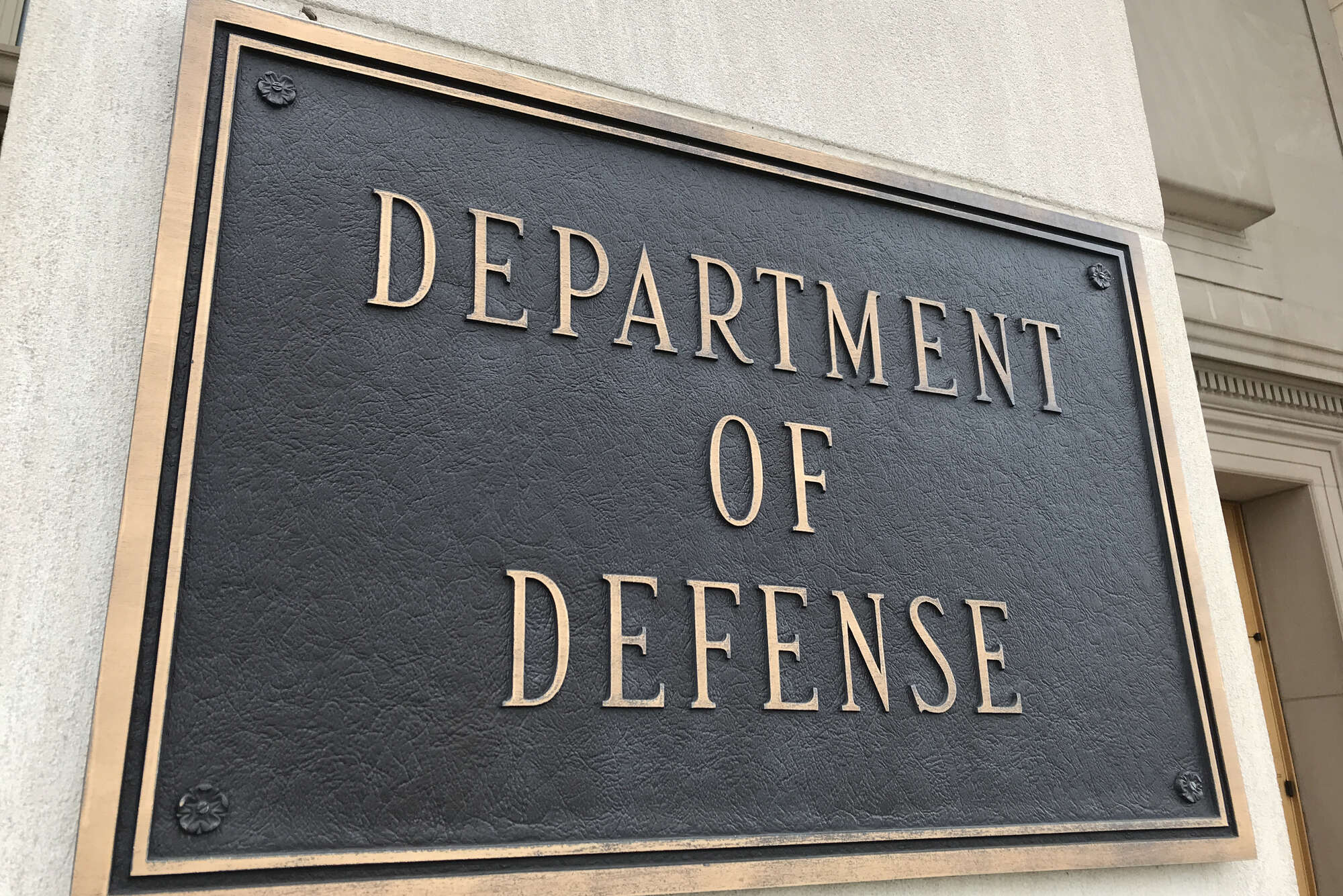
DoD strips job protections from civilian employees, directs managers to fire with ‘speed and conviction’
“They’re stripping due process significantly and making it easier for arbitrary terminations, similar to private sector employment at will,” Sean Timmons said.
Anastasia Obis
October 29, 2025 6:33 pm
4 min read
The Defense Department is stripping away job protections from its civilian employees and directing managers to “act with speed and conviction” to fire employees performing “unsuccessfully.”
A new Sept. 30 memo titled “Separation of Employees with Unacceptable Performance,” which became public Tuesday, also warned that managers will be held accountable if they fail to remove poor performers.
Pentagon’s Under Secretary of Defense for Personnel and Readiness Anthony Tata, who signed the memo, suspended the department’s requirement that managers attempt to rehabilitate underperforming employees — clearing the way for supervisors to fire workers whose performance is deemed “unacceptable” more quickly.
“They are trying to cloak it in legalistic language and make it sound legitimate, but the reality is they’re stripping due process significantly and making it easier for arbitrary terminations, similar and functional to private sector employment at will,” Sean Timmons, managing partner at Tully Rinckey PLLC, told Federal News Network.
]]>
Legal experts and analysts warn that the new policy could be used to remove anyone who does not align with the Trump administration’s priorities.
The memo comes amid Defense Secretary Pete Hegseth’s broader push to shrink and reshape the Pentagon’s civilian workforce — Hegseth described the effort as “clearing out the debris” during his highly unusual meeting with admirals and generals last month.
“I look at this memo within the broader context of Pete Hegseth’s actions as defense secretary up to this point. We have seen from him an increasing politicization of the military. If you look at every step they’ve taken within the Department of Defense since January — this is just another piece of political maneuvering that they’re using to enable their abilities to shape the department in the image that they back and to remove people who don’t align with their vision and their political ends, and give them an ability to fire those who don’t work well with them,” Virginia Burger, senior defense policy analyst at Project on Government Oversight, told Federal News Network.
Timmons said that previously, there needed to be substantial deviations from meeting objective job-specific criteria to justify termination. Under the new memo, the criteria have become more subjective — and that subjectivity gives managers greater discretion for potentially arbitrary termination.
“If they want to give you flexibility because they like you, they can certainly bend the rules and say, ‘We’ll give you another chance.’ If they don’t like you, and you’re not with the program, you’re done,” Timmons said.
The memo advises supervisors to follow the 12 Douglas Factors that agencies are required to consider when deciding on disciplinary action against a federal employee, but then it adds language that makes it easier to justify termination. Under the nature and seriousness of the offense factor, for instance, the memo says that “even small lapses can accumulate to justify removal if they hinder DoD’s efficiency.”
“They are saying, ‘Look, we’re following Douglas, we’re following neutral criteria, we’re not making it specific to any permissible category.’ But in reality, they are — they’re just trying to navigate around it. Which is what private employers do all the time when they want to fire women. They just make the criteria impossible to comply with. They just don’t target women specifically, or target people who are pregnant specifically, or target Black people specifically — they just make the criteria impossible to fill and then it gets rid everybody,” Timmons said.
]]>
The memo also allows the department to use the deferred resignation program, voluntary separation incentive payments and voluntary early retirement authority to “facilitate efficient employee removals.”
According to the memo, employees now have just seven days to respond to a notice of proposed removal. The deciding official — who must be no more than two levels above the employee’s supervisor — then has 30 days to issue a final decision. If a deciding official doesn’t provide a final decision within that window, the case file will be sent directly to the Under Secretary of Defense for Personnel and Readiness.
In addition, the memo directs the deputy assistant secretary of defense for civilian personnel policy to examine the feasibility and potential impacts of centralizing human resources functions related to disciplinary and adverse actions.
“This raises a couple flags. The first two being they want oversight of any misconduct, probably because they either want to make sure that those who are potentially being held accountable for things Hegseth and his team think they should be held accountable for aren’t fired. The other side of the coin is that, potentially, they want oversight of people who they do think should be fired for other reasons that may otherwise be flagged, and they ensure that they’re fired,” Burger said.
If you would like to contact this reporter about recent changes in the federal government, please email anastasia.obis@federalnewsnetwork.com or reach out on Signal at (301) 830-2747.
Copyright
© 2025 Federal News Network. All rights reserved. This website is not intended for users located within the European Economic Area.
