

Participants will see yet another year of large premium increases for 2026, with increasing costs that will impact virtually all enrollees in both the Federal Employees Health Benefits and Postal Service Health Benefits programs.
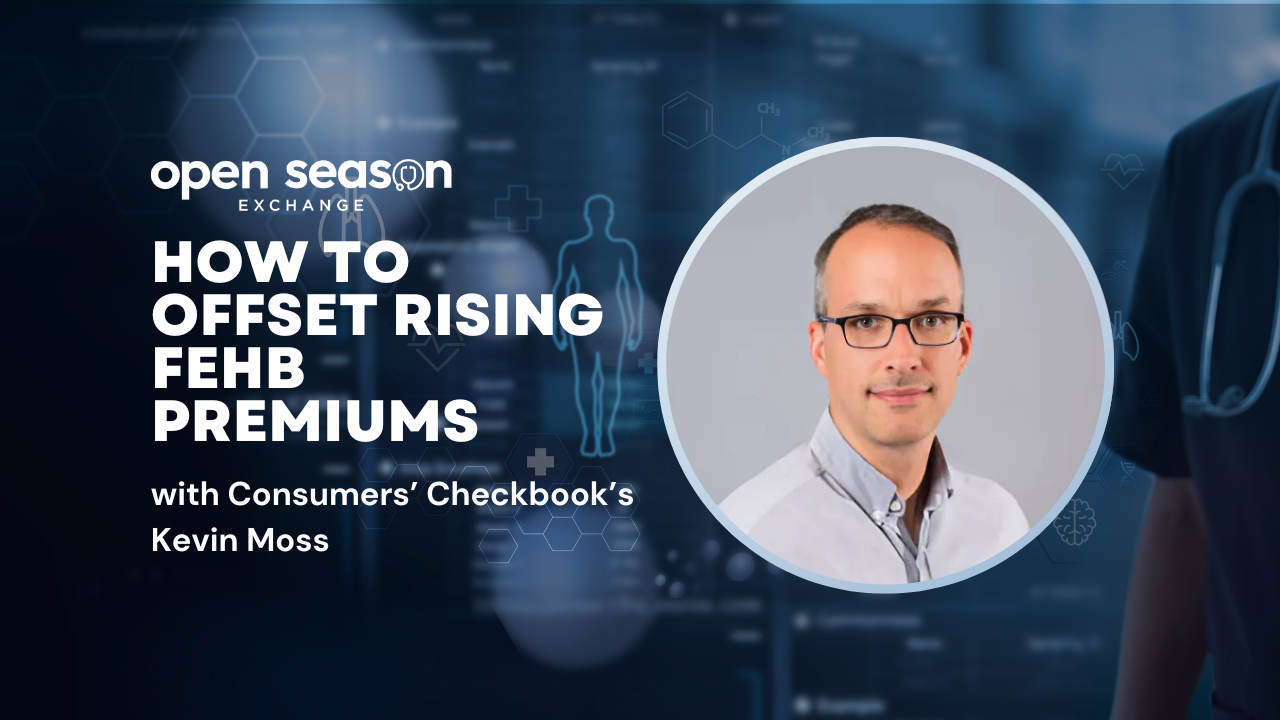
But Kevin Moss, director of marketing and fundraising at Consumers’ Checkbook and our Fed With Benefits columnist, said that’s not the full story this Open Season.
“The premiums don’t all move in the same direction,” Moss said during Federal News Network’s 2026 Open Season Exchange. “There are 23 plans next year where the premium is going down in FEHB. … About half of all the other plans are either moving below that average or above that average. So you’ll have to do the research this Open Season.”
Overall, premiums are going up substantially for plan year 2026. FEHB participants will pay an average of 12.3% more toward their premiums. Out of all FEHB plans, 57 are increasing at a rate lower than the average, and 49 plans are increasing at a rate higher than the average.
For PSHB participants, premium costs are rising by an average of 11.3%, with 35 increasing at a rate below the average and 26 increasing more than the average. Thirteen plan premiums are decreasing, and one is staying the same.
Why premiums are on the rise
Some of the major driving factors behind the premium increases are GLP-1 medications, something that the Office of Personnel Management requires carriers to cover, as well as the rising age of enrollees in FEHB and PSHB.
Premiums are also rising in the Federal Employees Dental and Vision Insurance Program (FEDVIP), but to a much smaller extent. For 2026, the average dental premium increase is 3.35%, while vision premiums will rise by an average of 0.47%.
Still, there are several ways that enrollees can hedge against the rising costs next year, Moss said. For current federal employees, he recommended contributing to a Flexible Spending Account through the FSAFEDS program. It’s an option that’s available to all active federal employees, but right now, just 20% of the federal workforce takes advantage of the program.
The FSA option allows federal employees to set aside pre-tax dollars for eligible medical, dental and vision costs — and feds may be able to save about 30% on those costs by using an FSA. For 2026, federal employees can contribute about $100 more toward an FSA, for a total contribution limit of $3,400.
“Every federal employee has some out-of-pocket health care costs that they can budget and predict,” Moss said. “When we think about medical expenses and when we also consider vision expenses and dental expenses, I think most federal employees can at least find a few hundred dollars that they predict that they’re going to spend out of pocket.”
Changes to plans and coverage for 2026
At the same time that most health plan premiums are on the rise, it’s inevitable that each year some plans will exit the FEHB marketplace, while some new ones pop up.
For 2026, there will be a total of 47 carriers and 132 plan options available in the FEHB program, according to OPM. For PSHB, there will be 75 total plan options participants can choose from, across 17 different carriers.
A number of smaller and regional plans are leaving the FEHB marketplace next year: Health Alliance’s HMO Standard; AvMed Health Plan’s HDHP and Standard plans; Independent Health’s High plan; Blue Care Network of Michigan’s High plan; and Priority Health’s High plan.
GEHA Elevate and GEHA Elevate Plus are the only two plan options leaving PSHB next year.
But Moss said the most significant change for 2026 are the two plans from the National Association of Letter Carriers that are leaving the FEHB program. NALC’s exit from FEHB will impact about 29,000 enrollees who will have to either select a new plan during Open Season or be auto-enrolled into GEHA High.
That auto-enrollment option might be the right choice for individuals, Moss said, but it also might not.
“You’ll want to find out how it works before getting auto-enrolled in that plan,” Moss said.
There are also several important benefit updates that enrollees should be aware of, Moss explained. There have been some recent changes, for instance, in the coverage of in vitro fertilization through FEHB and PSHB. BlueCross BlueShield Standard and GEHA High both offer a similar benefit of up to $25,000 to cover IVF treatments.
“If you’re thinking about IVF, just make sure that you’re also thinking the other aspects of plan choice before making that plan decision,” Moss said. “What are the premium differences? What about provider network? What about the other benefits that those plans offer? Make sure that you’re really comparing on more than just the IVF.”
OPM additionally requires all carriers in both FEHB and PSHB to cover at least one GLP-1 medication prescribed for weight loss — something that Moss said is ahead of the curve in comparison to the commercial market.
“You’re going to want to go to the prescription drug resource information on the carrier websites to find out about cost coverage, whether there’s pre-authorization requirements and get some pricing information,” he said.
One other notable change for 2026 is that OPM is requiring all carriers to drop coverage of gender-affirming care for participants. OPM’s requirements earlier this year initially told carriers only to stop providing pediatric coverage of gender-affirming care, but OPM later expanded the requirement to block coverage for all enrollees in both FEHB and PSHB.
An important caveat to OPM’s changes, however, is that FEHB or PSHB enrollees who are mid-treatment for gender-affirming care will still be able to continue getting their treatment covered next year.
“The definition of ‘mid-treatment’ is left to the carriers, so anyone who’s using gender-affirming care services will really want to find out from their carrier, either through the plan brochure or the carrier website itself,” Moss said.
Taking advantage of Open Season
Even if enrollees feel satisfied with their plan option, they’d still be wise to do some research during Open Season, Moss said. Usually, just about 5% of FEHB enrollees change their plan options during each year’s open enrollment window.
“There’s homework that every federal employee has, and it all starts with looking at what’s different with your plan that you currently have,” Moss said. “The premium is probably different. The benefits can change.”
Taking a look at section two of a carrier’s plan brochure will detail any changes in benefits and costs that will occur next plan year. Because OPM mandates that all carriers’ plan brochures have the same formatting, it’s relatively easy to compare costs and benefits across different plan options, Moss said.
OPM also has a plan comparison tool, and Consumer’s Checkbook offers a “Guide to Health Plans” for federal employees, which is accessible for free through many federal agencies. The comprehensive guide includes estimated yearly costs and which plans may have the best value.
“All these resources are there for you to help people better understand both their plan and different plan options this Open Season,” Moss said.
In spite of the sharply rising premiums, Moss said, “There could be a positive here: It may spur folks to actually look to see, ‘Are there other plans that maybe can offer greater value, where I can still keep the providers that I’ve grown accustomed to but then save quite a bit of money by switching plans?’ ”
Discover more articles and videos now on our 2026 Open Season Exchange event page.
Copyright
© 2025 Federal News Network. All rights reserved. This website is not intended for users located within the European Economic Area.
