

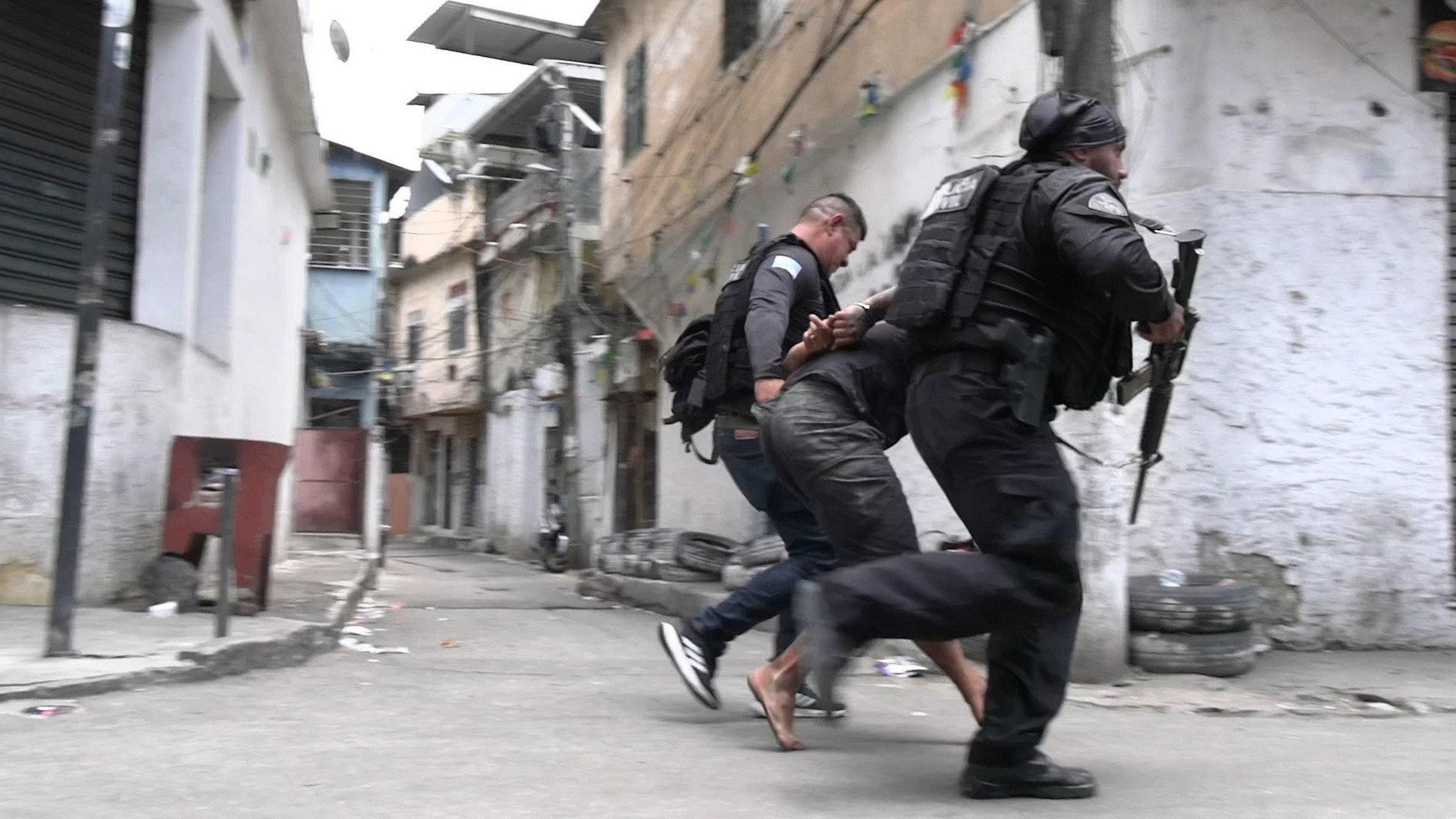
Two recent law enforcement operations in Brazil demonstrate the polar extremes of how both organized crime and policing operate in the country. One involved a commando raid that devolved into urban warfare. The other was a white-collar corruption probe. The contrasting political impact of the raids highlights the challenge facing authorities in Brazil and across the region, who are under increasing pressure to achieve high-profile successes in the war against criminal cartels, even as organized criminal groups’ less-visible operations remain a major problem.
On Oct. 28, local and state police armed with heavy weaponry entered Rio de Janeiro’s Alemao favela to capture the leadership of a criminal organization known as the Comando Vermelho. The CV controls all aspects of everyday life in the favelas where it operates: Any household that wants electricity, cable television or internet connections must pay the gang. Gas cylinders for cooking are distributed through gang networks. Ride-sharing apps are banned, forcing residents to use transportation operated by the gang. More than just a criminal enterprise, the CV is a parallel government that taxes residents on every aspect of life in return for providing them with services, while brutally enforcing its rules with swift punishment for anyone who challenges its authority. For all these reasons, local and state governments want to diminish the influence of the CV and other gangs like it, and removing the CV’s leadership in Alemao was an attempt to do so.
However, the CV responded to the raid by engaging with security forces, matching them in firepower while also deploying drones in the ensuing fighting. It was a level of technological innovation that Brazilian security forces will need to contend with in future raids. Additionally, the gang was later found to have used significant numbers of ghost guns, which are made from 3D printers or otherwise manufactured in a way to make them untraceable. The use of these weapons suggests the authorities have done a poor job of shutting down the black-market supply chains by which the country’s criminal gangs procure weapons.
