

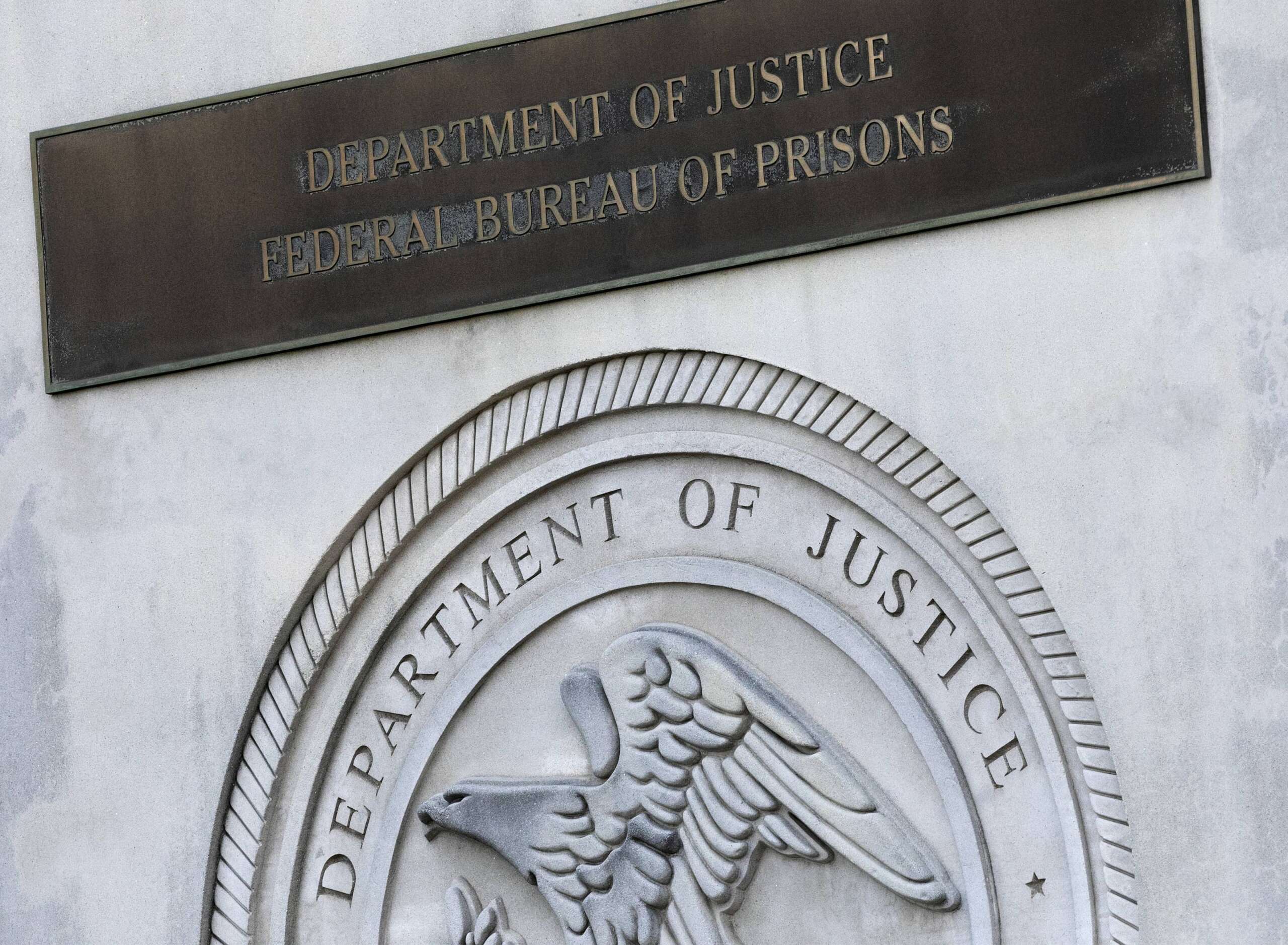
A federal union representing over 30,000 Bureau of Prisons employees is suing the agency over its recent cancellation of the BOP’s collective bargaining agreement.
The lawsuit, filed last week by the American Federation of Government Employees’ Council of Prisons Locals 33, alleged that the agency’s decision to cancel the union contract violated First Amendment rights, as well as the Administrative Procedure Act.
The union argued that BOP Director William K. Marshall III’s Sept. 25 announcement ending the labor-management agreement “made clear” that the contract was not canceled due to President Donald Trump’s executive orders, or for “national security” purposes. Instead, the union alleged that it was a form of retaliation, and that the agency did not follow required procedures in its actions.
The union is asking for an injunction to reverse the collective bargaining agreement’s cancellation at BOP.
]]>
An AFGE official, speaking anonymously for fear of professional retaliation, said the intention of the new lawsuit “is to protect our members and advocate for them the way we always have.”
“Our agency was status quo for months — then just decided out of nowhere that this union is a roadblock,” the official said. “Especially in law enforcement, you need protections in place. You need a union to be able to help these staff through these situations. That, to me, is our biggest driving force. We just want to be there to protect our people.”
A spokesperson for the BOP declined Federal News Network’s request for comment, stating that the agency does not comment on pending litigation or ongoing legal proceedings. The spokesperson instead directed to Marshall’s initial September announcement for information.
In the September announcement, Marshall said the decision to cancel the contract was “to make [employees’] lives better,” while adding that AFGE had become “an obstacle to progress instead of a partner in it.”
“[The union contract] didn’t give you your protections, the law did, and Bureau policy continues them,” Marshall said in September. “This isn’t about taking things away, it’s about giving you more.”
Earlier this year, President Donald Trump issued two executive orders, calling on most agencies to cancel their union contracts and terminate collective bargaining for broad swaths of federal employees.
Although Trump’s orders made use of a narrow legal provision that lets a president suspend collective bargaining for “national security” purposes, BOP’s announcement in September made no direct mention of national security.
]]>
The union said in its new lawsuit that there was no “reasoned explanation” for ending the BOP contract, in effect a violation of the Administrative Procedure Act. Additionally, the union alleged that BOP failed to consider alternatives to the contract’s cancellation, as well as the interests of union members by “suddenly pulling the plug on union protections.”
The lawsuit also argued that the contract termination violated the First Amendment, which prohibits agency officials from retaliating against either individuals or organizations based on their protected speech.
As a result of the contract’s termination, BOP employees “have become even more hesitant than they were already to engage in activity that is or could be perceived as being contrary to policies of the Trump administration,” the union wrote.
More broadly, AFGE is suing the Trump administration over the president’s pair of executive orders and several agencies’ subsequent actions ending collective bargaining. The BOP lawsuit, in comparison, is more narrowly focused on the timing and manner of BOP’s specific decision to cancel the contract covering bargaining unit employees.
AFGE National President Everett Kelley expressed support for the new and separate lawsuit at BOP.
“Their union contract has provided employees a voice at work to ensure critical protections, including safeguards against unsafe working conditions, unfair discipline and staffing shortages that put both workers and the public at risk,” Kelley said, adding that ending the contract “is a dangerous action that should alarm everyone.”
The legal action also comes as the Protect America’s Workforce Act, a bill to reverse the Trump administration’s efforts to remove union protections, heads toward a House floor vote. If enacted, the legislation would restore collective bargaining for tens of thousands of federal employees.
Many agencies have proceeded with “de-recognizing” their unions, after an appeals court in August granted a stay on a preliminary injunction that had previously been preventing agencies from implementing Trump’s anti-union orders.
But in comparison with other agencies’ contract terminations, BOP’s decision was delayed. It took nearly two months following the court decision before the agency moved forward with ending the agreement. Originally, the contract was set to expire May 28, 2029.
]]>
The contract laid out policies for employees on overtime, shift work, sick leave and safety requirements, as well as procedural protections for employees during reduction-in-force proceedings. The agreement also secured limitations on disciplinary actions, and set standards around official time, and grievance and arbitration procedures.
“The [collective bargaining agreement] was the product of years of negotiations to safeguard essential rights for bargaining unit members,” the union’s lawsuit stated.
During the two months prior to the contract’s cancellation, the union said the agency appeared to be upholding the contract’s policies, for example by holding labor-management relations meetings, and maintaining space for union officials on-site — but then moved to terminate the contract “effective immediately,” with little notice to union officials.
In his September announcement, Marshall stated that canceling the contract would not have any impact on job security, pay, benefits or safety for correctional officers.
But union officials said there were issues “almost immediately” after the collective bargaining agreement was ended. For instance, the union is now no longer able to represent employees when there are workplace issues, such as an instance of alleged harassment on the job. Prior to the contract’s cancellation, union officials would speak with BOP leaders and work to conduct an assessment or investigation into any issues that arose.
“The union typically walks you through the process, helps you respond, helps you through the investigation,” a union official said. “But we’re not there — and these staff don’t know what they can and can’t do, because we’ve always been there.”
If you would like to contact this reporter about recent changes in the federal government, please email drew.friedman@federalnewsnetwork.com or reach out on Signal at drewfriedman.11
Copyright
© 2025 Federal News Network. All rights reserved. This website is not intended for users located within the European Economic Area.
