

Caribbean Matters is a weekly series from Daily Kos. Hope you’ll join us here every Saturday. If you are unfamiliar with the region, check out Caribbean Matters: Getting to know the countries of the Caribbean.
The Trump regime continues its patently illegal provocations in the Caribbean, which critics and even some media sources aren’t afraid to call “murder.”
We covered this topic in “Caribbean Matters: Extrajudicial murder in the Caribbean?” in September and sadly President Donald Trump has continued to escalate the situation with more boat bombings targeting alleged drug traffickers.
The Intercept’s Nick Turse delved into the quagmire with an article titled “Two Boat Strike Survivors Become First Known Prisoners in Trump’s War on “Narcoterrorists”:
The Navy is holding two survivors of a U.S. attack on a suspected drug smuggling boat in the Caribbean, according to two government officials.
The two survivors were on board a boat that the U.S. military attacked on Thursday, according to the two officials who spoke to The Intercept on the condition of anonymity. They are being held on a warship and are believed to be the first prisoners of the Trump administration’s undeclared war against undisclosed “narcoterrorist” groups.
Why is Trump taking military action in the Caribbean?
The Trump administration has justified the boat attacks as a matter of national self-defense at a time of high overdose deaths in the United States. But the surge in overdoses has been driven by fentanyl, which comes from Mexico. South America is instead a source of cocaine, much of which originates in Colombia.
The administration has moved a large amount of naval firepower into the Caribbean — far greater than is commensurate with the task of destroying small boats — and is weighing an operation to remove Mr. Maduro, whom it calls a drug cartel leader. The proponents of a regime-change push include Marco Rubio, the secretary of state and national security adviser, and the C.I.A. director, John Ratcliffe.
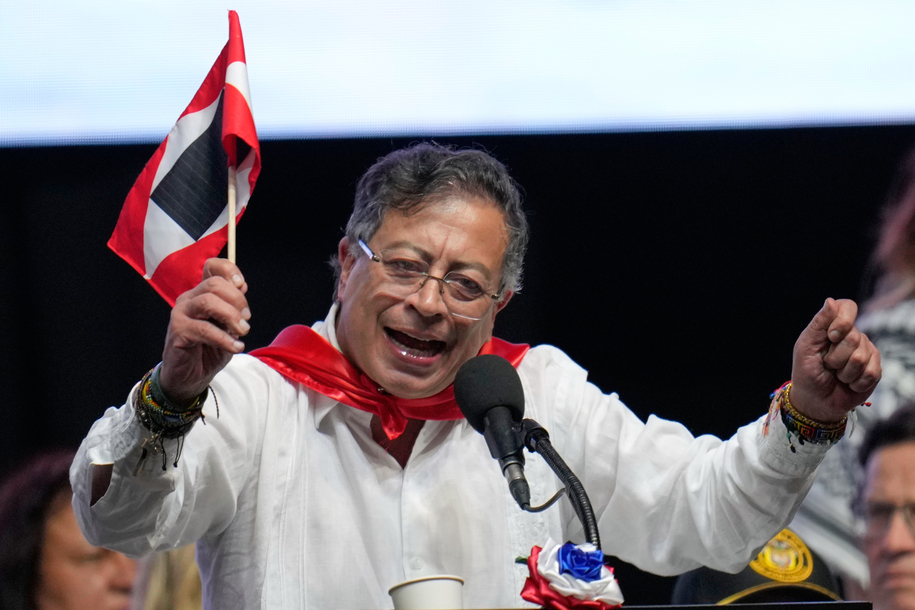
Unsurprisingly, Trump has lashed out against criticism from Colombian President Gustavo Petro.
CNN reported “Trump escalates back-and-forth with Colombia’s president, announcing end of US payments to country”:
President Donald Trump announced Sunday he would end all US payments and subsidies to Colombia, marking a dramatic escalation in his back-and-forth with the country’s president, Gustavo Petro.
Trump said in a post to social media that Petro “does nothing to stop” the production of drugs in his country, “despite large scale payments and subsidies from the USA that are nothing more than a long term rip off of America.”
“As of today, these payments, or any other form of payment, or subsidies, will no longer be made to Colombia,” the president said in all caps.
Instead of just reporting a body count, The Guardian put human faces to what is being perpetrated.
Also disturbing are the Trump cabal’s attempts to involve other countries in the Caribbean, like Grenada.
Bert Wilkenson at The Amsterdam News reported “U.S. wants to set up military radar in Grenada to monitor Venezuela”:
Maybe only the top officials at the White House and Pentagon know the exact plans for possible military action against Venezuela, but Washington appears to be soliciting the help of several reluctant Caribbean Community (Caricom) nations in its ambitions against the South American nation.
In the past week, the Trump administration formally asked the Eastern Caribbean nation of Grenada to allow the U.S. to establish a military radar base at Grenada’s main international airport, presumably to monitor activities in Venezuela, just 100 miles to the south of the island.
Grenada’s Dickon Mitchell administration had been given less than a week to make up its mind on the issue, even as local opposition to the idea simmered and the U.S. upped the pressure on authorities by sending Southern Commander Navy Admiral Alvin Holsey to Grenada and Antigua for urgent talks with top officials on Tuesday and Wednesday of this week.
This report was posted on Oct. 16, prior to the abrupt resignation of U.S. Southern Command chief Adm. Alvin Holsey.
Jacqueline Charles at The Miami Herald detailed that shocking turn in “Head of U.S. Southern Command steps down days after visit to Caribbean”:
“It’s been an honor to serve our nation, the American people and support and defend the Constitution for over 37 years,” Holsey, who was nominated by President Joe Biden, said in a statement posted on X. “Serving as your commander and deputy for the past 34 months has been a tremendous honor.” Holsey’s unexpected departure comes as the Pentagon faces a wave of high-profile dismissals and resignations, and amid growing controversy over the build up of U.S. military presence in the southern Caribbean off the coast of Venezuela to allegedly target drug traffickers.
[…]
It is unclear whether Hosley and Grenada officials discussed the proposal for the radar sites, but ahead of Hosley’s arrival in St. John on Monday, Antigua Prime Minister Gaston Browne left no doubt where he stood. Browne announced in an interview that his twin-island nation “has absolutely no interest in hosting any form of military assets here in the country.”
Not surprisingly, there is open speculation about the reasons behind Holsey’s abrupt exit.
You may be wondering where CARICOM stands on all this. Reaction from member nations is mixed. Caribbean Life’s Bert Wilkenson reported on how Trinidad and Tobago has supported Trump in “CARICOM speaks on US action in the region. T&T begs to differ”:
Caribbean Community leaders issued a statement at the weekend, urging a peaceful resolution to the crisis in the Southern Caribbean but as they united on the issue, one of its founding members made it clear it has a much different view of the situation.
Trinidad and Tobago said it had adopted a much different attitude to the others in the 15-member grouping by throwing its full support behind the region, a point leaders ensured was recorded in their weekend statement on US military threats to Venezuela.
“Heads of government CARICOM met and discussed various issues on the regional agenda including the increased security build up in the Caribbean and the potential impacts on member states. Save in respect of Trinidad and Tobago who reserved its position, heads reaffirmed the principle of maintaining the Caribbean region as a zone of peace and the importance of dialogue and engagement towards the peaceful resolution of disputes and conflict. CARICOM remains willing to assist towards that objective,” the terse statement noted.
The administration there has repeatedly stood behind the Trump administration in its ambitions on Venezuela with Prime Minister Kamla Persad Bissessar calling on US soldiers to “kill them all violently,” referring to alleged drug traffickers trying to move large shipments of cocaine north to her nation and also to the US. She says such activities over the years have led to a spike in violent crime with murders averaging 600 annually, gangland violence and increases in felony crimes including drive-by shootings.
The Trinidad & Tobago Guardian newspaper however posted a critique written in Jamaica which differed with Trinidad Prime Minister Kamla Persad Bissessar’s stance:
The Jamaica Gleaner has criticised Trinidad and Tobago Prime Minister Kamla Persad-Bissessar for her government’s approach to the US naval build-up in the southern Caribbean and its threat of military action against Venezuela.
In an editorial published Monday, the newspaper described it as “not clear what the Trinidad and Tobago government intended to signal by reserving its position” on CARICOM’s declaration that the region should remain a zone of peace. CARICOM had reaffirmed “the importance of dialogue and engagement towards the peaceful resolution of disputes and conflict” and expressed support for “the territorial integrity of countries in the region” and the right of citizens “to pursue their livelihoods in safety.”
[…]
The newspaper also criticised Persad-Bissessar’s earlier comments, saying she had given “full-throated support to the Americans, urging the United States to kill the alleged drug smugglers ‘violently’” and called the Caribbean as a zone of peace a “false ideal.”
The editorial added that fears have grown, even in Jamaica, after reports that two Trinidadian fishermen were among those killed in US operations.
If you currently have sane elected representatives, contact them and urge them to push back against Trump’s murder spree.
Please join me in the comments section below for more, and for the weekly Caribbean News Roundup.
