

Caribbean Matters is a weekly series from Daily Kos. Hope you’ll join us here every Saturday. If you are unfamiliar with the region, check out Caribbean Matters: Getting to know the countries of the Caribbean.
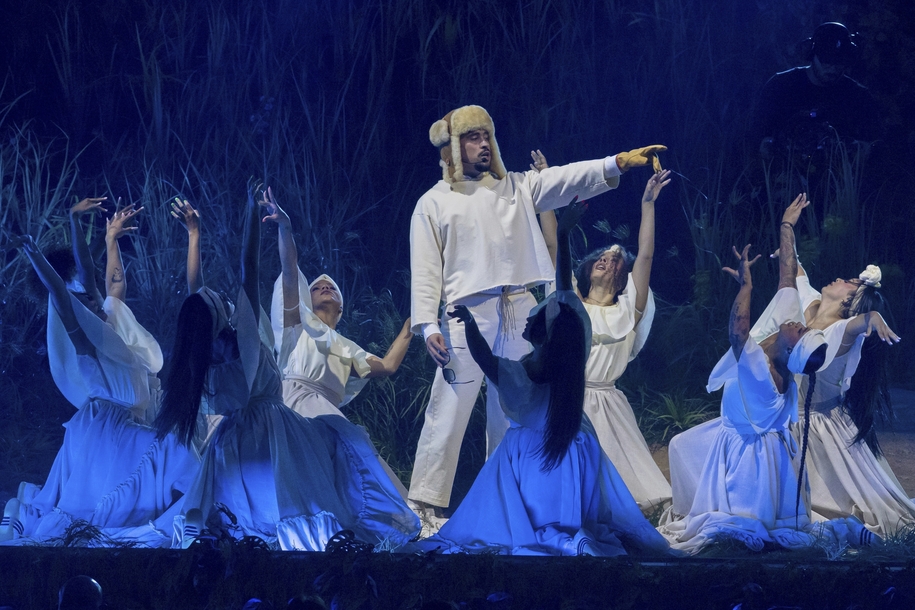
While the use of the term “territory” both defines and obfuscates Puerto Rico’s colonial relationship to the United States, the latest uproar swirling around Bad Bunny performing at the Super Bowl halftime show has raised the issue yet again.
Benito Antonio Martínez Ocasio, known as Bad Bunny, has made his politics and his staunch support of Puerto Rican decolonization and independence quite clear in his music videos.
Boricuas Unidos en la Diáspora, an organization that advocates for Puerto Rican independence, has highlighted some key objections in response to the uproar, responding to people quoting over and over that “Bad Bunny is an American” to counteract MAGA hate:
I’m in agreement that the issue really is racism:
I’ve raised the subject of Puerto Rico the colony here and here in the past but given that Saturday is the anniversary of a key historical event, I’m raising it again.
On July 17, 1898, an independent government was officially installed in Puerto Rico. A week later, however, the island was invaded by U.S. forces.
After 400 years of Spanish domination, the island was now under the control of the United States. The short-lived independence was won against the backdrop of the Spanish-American war, a conflict in which the U.S. contributed to the ouster of Spain from its colonies of Puerto Rico, Cuba, and the Philippines but which set the stage for contentious relations between the U.S. and all three countries for more than a century.
By the time of this pivotal war, Puerto Rico’s indigenous, Spanish, and African roots had blended into the island’s unique political, social, religious and cultural life. Much of what we know today as Puerto Rican culture had been forged by the end of the nineteenth century. Puerto Rico’s artistic and cultural traditions, literature, music, and visual arts are recognized internationally and have made pronounced contributions to the development of artistic expression — in Latin America, among Latinos in the U.S. and internationally. […]
A new colonial era began in 1898. Puerto Rico was now ruled as a possession of the U.S. Conflict between the people and their new rulers emerged first over language. Illiteracy was widespread at that time, affecting 85 percent of the population, and the U.S. expected no resistance from the Puerto Ricans when it imposed English-only laws on the island. Puerto Rican intellectuals and independentistas (people who fight for Puerto Rican independence) resisted the replacement of the Spanish language with English. From 1898 until the establishment of the Commonwealth of Puerto Rico in 1952, U.S. governors maintained some type of English-only law over Puerto Rico. In 1952, Spanish once again became the official language of Puerto Rico — although the use of English continues to be required in some educational, governmental and judicial functions.
In 1917 President Woodrow Wilson signed the Jones Act, which made Puerto Ricans citizens of the United States. Those who chose to reject U.S. citizenship would become exiles in their own homeland. Others left the island as a rejection of U.S. domination. U.S. citizenship, extended in the midst of World War I, brought with it the imposition of military service on Puerto Ricans.
Bianca Graulau, the independent journalist whose work was featured in Bad Bunny’s video “El Apagón” (The Blackout) discusses U.S. colonial politics in the following two videos on the colonial politics of Puerto Rico:
In case you haven’t seen it, here’s Bad Bunny’s “El Apagón,” with Graulau’s mini documentary:
I’ve lost count of the number of times people have commented on my Puerto Rico stories that the “solution” to Puerto Rico’s problems would be “statehood.” As a supporter of independence, I politely take time to dispute that assertion, and suggest they read Javier A. Hernandez’s book “PREXIT: Forging Puerto Rico’s Path to Sovereignty” on why annexing Puerto Rico as a U.S. state would be an awful idea.
For a shorter read, Alberto Medina’s “The Case for Puerto Rican Independence” in Current Affairs lays out the argument.
More importantly, there is quite a bit of readily available material, which I doubt is taught in high schools, that you can find online on the history of how the U.S seized and colonized Puerto Rico, leading the island to its current un-democratic colonial status. Here are a few videos on that history.
This is on the U.S. invasion of Puerto Rico in 1898:
This Al Jazeera video gives background on how the U.S. has done whatever it can stay in control of Puerto Rico:
This segment that covers the extensive U.S. government spying on Puerto Ricans is chilling. As a person who has been subjected to FBI COINTELPRO surveillance the data discussed in this video was not a surprise:
FBI activities on the island surveilling independence groups continues until this day.
This HistoryUnpacked video focuses on the lies we were taught about Puerto Rico and the leaders that fought for its independence:
There is also El KharteL’s documentary on “The Untold Story of America’s Seizure of Puerto Rico”:
This video from Puerto Rico Abran los Ojos covers the Puerto Rican invasion up until present day:
For school teachers and parents, “Teaching for Change” offers a free downloadable collection of readings for the classroom on Puerto Rico and an annotated bibliography of books for children.
Thanks for reading. Please make an account if you don’t have one and join me in the comments section below to discuss, and for the weekly Caribbean News Roundup.
