

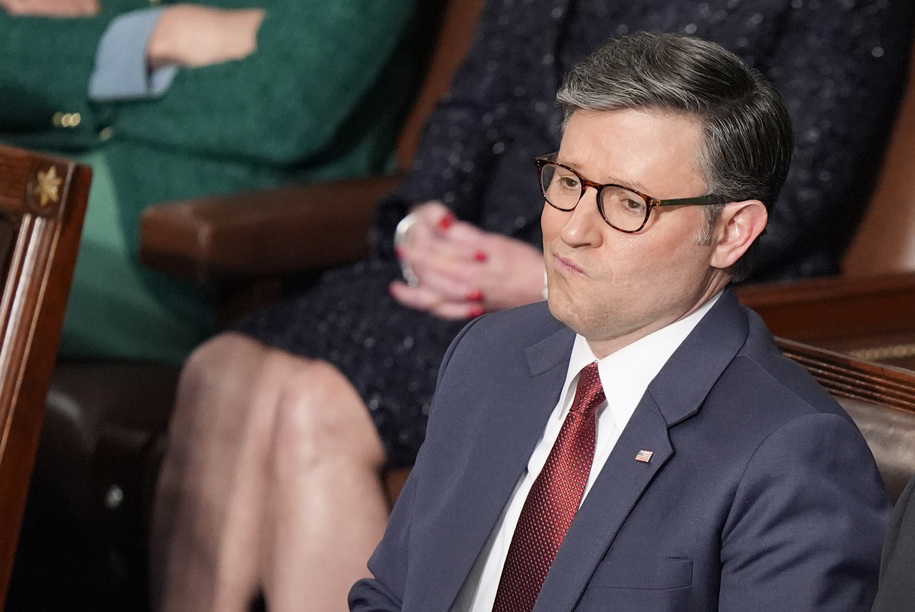
House Speaker Mike Johnson delivered a massive gift to Democrats on Tuesday, declaring that the House will spend the first half of 2026 focused on passing a health care bill.
“We’re gonna have a vote before the end of the year for sure, and then we’re going to continue to do improvements along the way. In the first quarter, second quarter, there’s a lot to fix in health care, we’ve all acknowledged that,” Johnson told Punchbowl News.
Those who have been following politics for a while remember how disastrous Republicans’ Affordable Care Act repeal effort was during President Donald Trump’s first go-round in the White House, in 2017.
Congressional Republicans wanted to repeal the ACA and replace it with a plan that would have, for all intents and purposes, gutted protections for people with preexisting conditions and forced sicker people into high-risk pools that would have made health insurance prohibitively expensive.
Republican Sen. Mitch McConnell of Kentucky, shown in 2017.
The repeal effort was so politically toxic that then-Senate Majority Leader Mitch McConnell declared the GOP would move on from trying to repeal the ACA. But the damage had been done. A year later, in 2018, Republicans lost control of the House in a blue wave.
Now, Johnson is reviving that effort nearly a decade later, turning the focus in an election year to an issue that voters generally trust Democrats to handle.
Rather than simply extend the enhanced tax credits that millions of Americans use to afford ACA plans—which polls show Americans want Congress to do—Johnson said the GOP-controlled House will not extend those tax credits and instead work on an overhaul.
In the meantime, those enhanced tax credits will expire, causing insurance premiums costs to more than double for millions of people, while Republicans try to hash out a supposed fix on health care in the United States.
“Americans’ healthcare premiums will skyrocket in 22 days, but Republicans are just now getting out their whiteboard to brainstorm ideas,” Democratic Rep. Teresa Leger Fernández of New Mexico wrote in a post on X. “The quickest [way] to give real relief today is to extend the tax credits—it’s that easy.”
The strange thing is, despite the GOP’s fury over the ACA, it’s basically a conservative idea. The plan was based on the one that Mitt Romney implemented in Massachusetts in 2006, when he was serving as governor. But after then-President Barack Obama announced the ACA, Republicans demonized the plan. They relied on lies and misinformation to turn their base against the legislation and Obama. And now the Republican Party has no real plan to achieve their promise of making insurance better and more affordable.
Hundreds of activists in 2017 protest against Republicans’ plans to overhaul U.S. health care system, at Trump International Hotel and Tower in New York City.
One plan they are kicking around would let the ACA tax credits expire and instead give a smaller group of low-income Americans $1,000 in health savings accounts, which they could use to purchase a plan.
“This plan wouldn’t prevent out-of-pocket premiums from spiking 114% on average for people in ACA plans,” Larry Levitt, executive vice president for health policy at KFF, wrote in a post on X, regarding the proposal. “It would cushion the impact by providing health savings account contributions for people willing to enroll in a lower premium plan with a deductible of over $7,000.”
That doesn’t sound like something voters would like. And Senate Minority Leader Chuck Schumer declared the GOP’s plan “dead on arrival.”
“Their bill is junk insurance; it’s been repudiated in the past. The American people will repudiate it once again,” Schumer said on Tuesday.
Ultimately, former House Speaker John Boehner didn’t get much right. But he was absolutely correct when he made this assessment in 2017, during the GOP’s first ACA-repeal effort: “In the 25 years that I served in the United States Congress, Republicans never, ever, one time agreed on what a health care proposal should look like. Not once.”
Nearly a decade later, that assessment still rings true.
And now Republicans will spend an election year fighting over health care proposals that Americans are sure to hate.
