

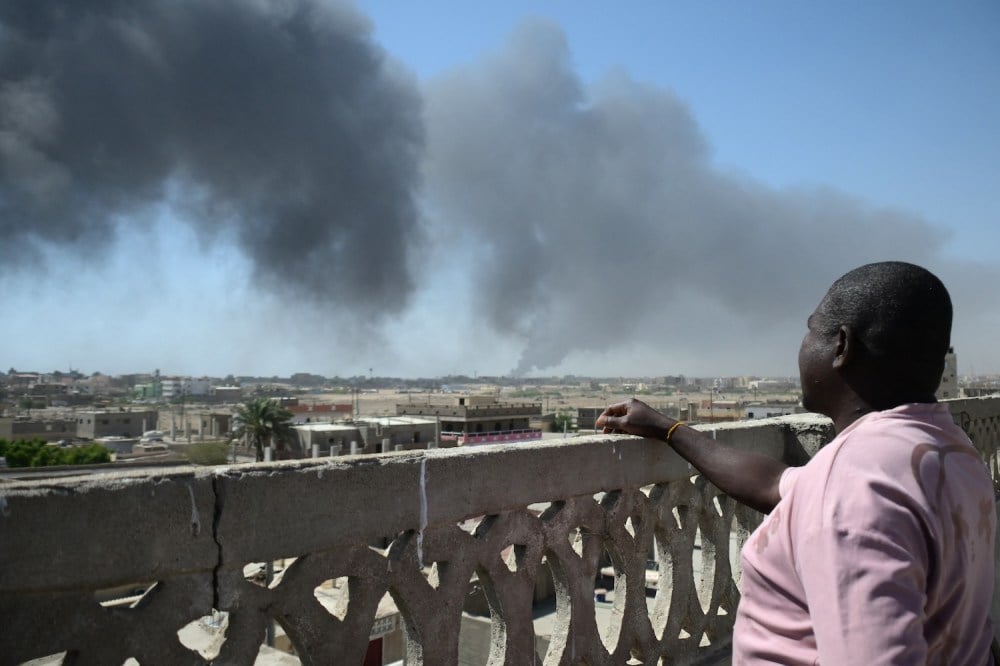
In Sudan, which has been engulfed in a ruinous civil war since 2023, drones have been devastating instruments of destruction. The conflict has killed as many as 400,000 people and displaced more than 12 million from their homes. Deployed indiscriminately against both civilian and military targets, the unconstrained use of drones by both sides has contributed to the war’s growing death toll and also inflicted heavy damage against vital infrastructure such as hospitals, airports, military bases, and ports.
The world is entering a new era of drone warfare. Drones are proliferating on the battlefield in both small and large conflicts. They are making warfare deadlier and easier to wage, granting increased firepower to nonstate actors and insurgent movements, in addition to enhancing the capacity of regular militaries. Fundamentally, drones offer several advantages. Unmanned systems allow militaries to conduct operations without risk to their own personnel; the human cost of deploying a drone is minimal. They are also effective weapons, enabling strikes against targets from remote distances. Compared with other types of weapons systems such as precision-guided missiles, drones have low acquisition and operating costs. Moreover, few states possess the requisite weaponry (at least at present) to defend against drones. Finally, drones are multifunctional. Not only are they adept at conducting kinetic strikes, but they can perform other critical functions, such as carrying out battlefield reconnaissance and surveillance.
In Sudan, which has been engulfed in a ruinous civil war since 2023, drones have been devastating instruments of destruction. The conflict has killed as many as 400,000 people and displaced more than 12 million from their homes. Deployed indiscriminately against both civilian and military targets, the unconstrained use of drones by both sides has contributed to the war’s growing death toll and also inflicted heavy damage against vital infrastructure such as hospitals, airports, military bases, and ports.
The world is entering a new era of drone warfare. Drones are proliferating on the battlefield in both small and large conflicts. They are making warfare deadlier and easier to wage, granting increased firepower to nonstate actors and insurgent movements, in addition to enhancing the capacity of regular militaries. Fundamentally, drones offer several advantages. Unmanned systems allow militaries to conduct operations without risk to their own personnel; the human cost of deploying a drone is minimal. They are also effective weapons, enabling strikes against targets from remote distances. Compared with other types of weapons systems such as precision-guided missiles, drones have low acquisition and operating costs. Moreover, few states possess the requisite weaponry (at least at present) to defend against drones. Finally, drones are multifunctional. Not only are they adept at conducting kinetic strikes, but they can perform other critical functions, such as carrying out battlefield reconnaissance and surveillance.
On one level, combatants are making use of cheap, attritable consumer-grade drones that even nonstate actors can produce in high numbers to disrupt troop movements, surveil terrain, or defend fortifications. But larger militaries are also incorporating more complex and costlier drones to achieve battlefield success, too. As a result of these factors, the drone race shows few signs of easing.
In Sudan, multiple regional powers have supplied the Sudanese Armed Forces (SAF) and its rival, the Rapid Support Forces (RSF), with advanced attack drones that can inflict major damage and alter the course of battle. This year, the RSF lost control of Khartoum to the SAF. It was a major blow to the group, and drones supplied by Turkey played a vital role in allowing the SAF to pry the capital loose. But the tables would subsequently turn in Darfur, a region in western Sudan roughly the size of France. El Fasher was the government’s last stronghold in the region. For 18 months, the RSF laid siege to the city, bombarding it with drones and heavy artillery. They began using Chinese drones supplied by the United Arab Emirates to strike community kitchens, displacement shelters, hospitals, and other civilian objects. As the siege dragged on, the casualties mounted. In one devastating assault in October, the RSF struck Dar al-Arqam, a displacement camp located on the grounds of a university, using two drones and eight artillery shells. At least 57 people were killed in the attack, including 17 children. And then in late October, the RSF mounted a decisive three-day offensive, using attack drones and pickup trucks mounted with machine guns to overwhelm the remaining government troops. Yet the fall of El Fasher didn’t stop the fighting; the RSF continued to deploy “state-of-the-art drones” and roving hit squads to massacre civilians in the city.
Sudan’s reliance on drones isn’t unique; across the world, drone use is proliferating. The data paints a grim picture. Just five years ago, in 2020, analysts recorded 6000 drone incidents worldwide resulting in about 11,300 fatalities. Four years later, the numbers had shot up dramatically. 2024 witnessed a fourfold increase, with nearly 51,000 recorded drone events leading to over 39,000 deaths. What accounts for the dramatic increase?
One driver is that war has returned to the global stage. While this resurgence has fueled the proliferation of drones, drone technology has also made it easier for states to resort to armed conflict. Deaths from state-based conflict reached a 32-year high in 2022 rivaling the Cold War era. n As opposing militaries have fought themselves to a standstill, they have turned to drones to gain an edge over their adversaries.
In the Russia-Ukraine war, commanders say that 70 percent of all battlefield casualties now come from unmanned aerial vehicles, or UAVs, replacing tanks and artillery. Russian drones saturate Ukraine’s skies each night, overwhelming Ukraine’s air defense systems and wreaking havoc on its infrastructure. Similarly, Ukraine has made drones a mainstay of its resistance against Russia; this year, its factories will produce more than 4.5 million drones for use in the war.
Surging drone use is not limited to Ukraine and Russia, either. Drones have become a mainstay in many other conflicts, from Lebanon and Myanmar to West Africa.
But the growth of war alone doesn’t fully explain the increased ubiquity of drones. Another factor is rooted in technological diffusion—the outward spread of knowledge, innovation, research, and ideas. While drone technology has been used by militaries since the early 20th century, it was only in the 2010s that UAVs became cheaper and more accessible. At that point, new entrants to the market began producing “good enough” products shipped off to a diverse set of clients. In just a few years, the number of countries possessing military drones surged. In 2019, the time of the last count, 95 countries had acquired military drones, with an estimated 30,000 UAVs in military service. Analysts at the time had identified 171 types of military drones and 268 military drone squadrons established in 58 countries; those numbers have only increased in subsequent years.
Middle powers such as Israel, Iran, Turkey, and the UAE have been particularly aggressive in securing new markets for their drone technologies or supplying favored regimes with advanced units. That’s because drones provide valuable geopolitical leverage. Take Iran’s transfer of Shahed drones to Russia in 2022. At a time when Moscow’s forces were flailing in their invasion, Tehran provided a much-needed boost to Russia, giving it access to cheap, attritable one-way attack drones that forced Ukraine to expend valuable munitions defending its cities against nightly bombings. But Tehran’s support came at a high cost. Reportedly, Russia paid $1.75 billion in gold bullion for the delivery of 6,000 UAVs. More significantly, the drone deal appears to have opened the door for Tehran to acquire Russia’s S-400 air defense system and Sukhoi-35 fighter jets—something the Kremlin had declined to provide in the past.
Similarly, in Sudan, a bevy of regional powers, including Egypt, Iran, Turkey, and the UAE, provided attack drones to both factions, seeking favor with the winning side. Turkey’s involvement in Sudan’s war is illustrative. In November 2023, its flagship drone-maker, Baykar, signed a $120 million contract with the SAF to supply it with up to eight TB2 drones, 600 warheads, and three ground control stations, along with 48 personnel to operate it. Previously, the government had relied on a fleet of armed Iranian drones, but the TB2s were a big improvement—they featured laser-guided munitions and a flying range of up to 2,400 miles and could carry more than 300 pounds of explosives.
Turkey had a lot to gain from the deal. Sudanese officials were considering offering Turkish firms access to copper, gold, and silver mines, in addition to fishing and fish processing licenses. Sudan also indicated it would grant development rights to Abu Amama, a key Red Sea port. (Previously, Sudan had concluded a $6 billion agreement with the UAE to manage the port but terminated the deal after Abu Dhabi began supplying weapons to the RSF.) Within 10 months, Baykar delivered the drone packages to the SAF. While the SAF already had reportedly received an earlier batch of TB2s courtesy of Egypt, this new package proved crucial. Once deployed, the Turkish drones were critical to the military’s successful campaign to retake Khartoum from the RSF in March 2025.
The RSF’s defeat in Khartoum dismayed its chief backer, the UAE. Abu Dhabi had profited from a thriving trade in smuggled Sudanese gold, billions of dollars’ worth of which was making its way illicitly to the UAE, courtesy of the RSF. In return, Abu Dhabi willingly sent drones, guns, and missiles back to the militants (although Emirati officials continued to deny it). After the Khartoum setback, rather than pressure the RSF to the negotiating table, the UAE instead “stepped up supplies” to shore up the group. A key weapon was the CH-95 drone manufactured by China Aerospace Science & Technology Corp., a state-owned enterprise. CH-95 drones were a big upgrade for the RSF—these medium-altitude aircraft can stay in the air for up to 30 hours, allowing for long-range surveillance and precisions strikes from more than 120 miles away. The militants capitalized on their new capabilities, deploying the Chinese drones to attack distant ports, destroy power plants, and lead their campaign against El Fasher.
As these examples show, regional states are using drones as geopolitical chips when it suits their interests—notwithstanding the resulting violence and destruction.
Curbing the proliferation of drones, given their widespread availability, is a Sisyphean task. Irregular armed groups such as the Houthis in Yemen and Hayat Tahrir al-Sham (HTS) in Syria have proved that restrictive export controls can be overcome through determination and ingenuity. Over time, both organizations developed homegrown drone programs and wielded them with tremendous effect against their opponents.
The Houthis built an impressive drone program largely from scratch. With assistance from Iran, they established large-scale drone production by 2018 and have since deployed armed UAVs in over 1,000 distinct events, causing more than 700 fatalities. In one notable confrontation in January 2024, the Houthis unleased a major assault against U.S. Navy ships—“one of the largest maritime battles the U.S. has faced since World War II”—sending 18 drones, cruise missiles, and ballistic missiles against four U.S. destroyers off Yemen’s coast.
In Syria’s case, HTS similarly developed a local drone program with limited outside assistance. The group established a dedicated drone unit, the Al-Shaheen Brigade, which built weapons in small workshops “based in houses, garages, converted schools, and warehouses.” In November 2024, HTS launched its campaign to topple Syria’s government, and drones provided a major boost, helping the militants to fend off government forces and paving the way for the country’s takeover in a matter of weeks.
Sudan, however, brings a unique set of circumstances. Neither the SAF nor RSF has demonstrated much capacity to develop an indigenous drone program on their own—certainly nothing approaching their current drone capabilities. The RSF is an “undisciplined paramilitary force dependent on looting and the support of foreign powers,” while the SAF is a “hodgepodge of former Sudanese military and political elites and Islamists, so feckless that they were chased out of Khartoum for nearly two years,” writes Michelle Gavin, an analyst with the Council on Foreign Relations. “These are not forces so mighty the whole world must simply standby while they do as they please.”
In Sudan’s situation, pushing Egypt, Iran, Turkey, and the UAE to shut off the flow of drones to their military clients would have a meaningful impact. Curbing drone exports won’t solve the conflict, but halting the supply of these mass-casualty weapons would be a demonstrable way to curtail the growing civilian death toll in the country. While drones are now a permanent feature of modern war, strategies for limiting their impact and protecting civilians still exist.
