

]]>
Terry Gerton From printed circuit boards to drone assembly, the Army’s organic industrial base is evolving to meet future combat needs. Colonels Brett Ayvazian and James Crocker from Army Materiel Command say modernization is underway, but aging infrastructure and supply chain fragility remain key challenges. They joined me at AUSA’s annual conference to discuss the situation…starting with a general description of the Army’s industrial base.
Col. James Crocker I think the Army’s industrial base is our organic ability to repair or manufacture things that are necessary for our Army to fight and win our nation’s wars.
Terry Gerton And some of these are Army-owned/contractor-operated, some of them are contractor-owned/contractor-operated?
Col. Brett Ayvazian Yes, ma’am. Government-owned/government-operated, government-owned/contractor-operating, and then part of the further broad defense industrial base is the contractor-owned/contractor-operated.
Terry Gerton Both of you obviously have direct personal experience here and you’ve been in combat operations, you’ve served at all kinds of different levels. From your perspective now, at the headquarters of Army Materiel Command, would you say that the Army’s industrial base is adequate to meet the demands that we face both today and in future operations?
Col. James Crocker I would say that our organic industrial base is evolving. I think it’s evolving from what we needed in the last 15 to 20 years to what we need in the future. For my experience at Tobyhanna Army Depot, we were very focused on communications electronic command systems that would come in and do repairs on those systems. Very rote system; so many trailer-mounted communication things that come through a year, you’d refurbish them, put them out of the field, and meet those requirements that are coming out of specifically Operation Iraqi Freedom and Operation Enduring Freedom. Today we don’t see that as much of a requirement inside Tobyhanna. So we see more of a move towards a technological requirement. In the last year, Tobyhanna has stood up its surface-mount technology printed circuit board manufacturing line to get after those things that are not necessarily easily available in the supply chain and try to enhance readiness that way. Focusing more on working with our PEOs and our PMs to work on the front side of the logistics cycle, like producing all of the mounting kits for all of our stuff going into next-generation C2. Things like that, I think, are where the future of our C5ISR depot are going. Because we may not be having to do overhauls that we did in the past, because of the cost are so cheap on those equipment, that there’s not really the benefit to do the overhauls.
Terry Gerton So tell me more about that in terms of how that’s changing the repair strategy for the kinds of equipment that Tobyhanna supports.
]]>
Col. James Crocker In your communication systems, you’re seeing — obviously, we’re still repairing shelters, right, there’s always going be a need for shelters that go in the back of Humvees and 5-Tons, and that’s a very vibrant repair line. But you may not be repairing all the components that go inside that shelter, right? You may just be refitting a rack, resetting up to a different configuration to meet the next requirement that the Army needs for the next evolution of what our communications architecture will look like.
Terry Gerton In the ammunition space, how are we doing there? We’re hearing a lot about ammunition inventories and supply. From your experience at Blue Grass, how are doing?
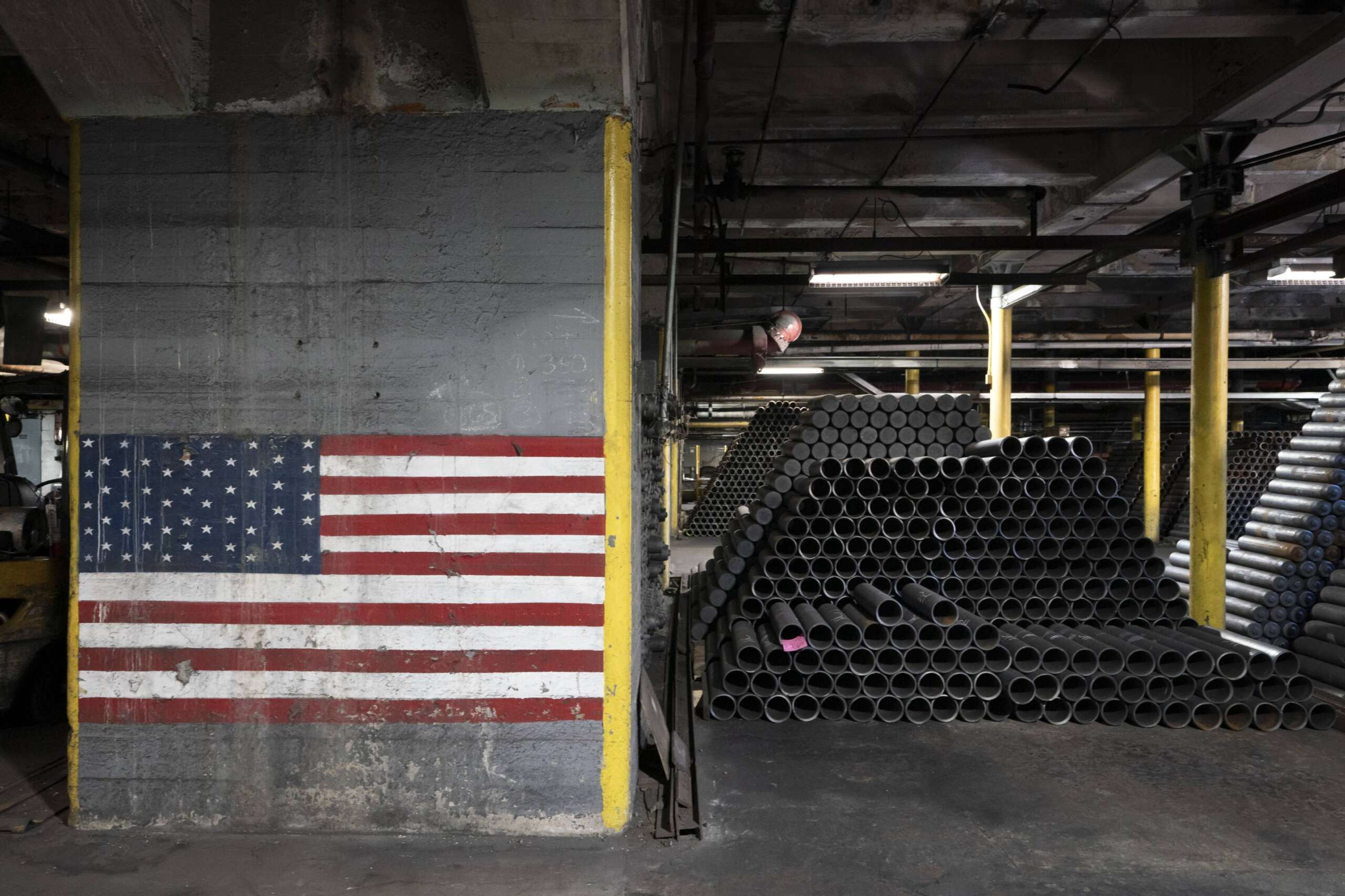
Col. Brett Ayvazian So ma’am, from the storage and distribution perspective and refurbishment at Blue Grass itself, I think we’re well-postured for where we are. However, our infrastructure definitely needs to be upgraded and updated. I mean, we’re still operating out of World War II-era facilities with just poor, old, degraded buildings. And so part of the whole OIB modernization effort is, over 15 years, to bring us up to date and up to speed to where we need to be as far as, you know, manufacture, refurbishment, storage, distribution, DMIL. So we’re on the path to get there. The last couple years that we’ve been in the OIB modernization space, the first portion of that is trying to upgrade our facilities so that we can modernize, we can get new lines, we can get robotics in there, we can expand our capacity. One of my subordinate units was Scranton Army Ammunition Plant, and they make the 155-millimeter metal parts.
Terry Gerton I’ve been to Scranton. It’s like a time travel experience.
Col. Brett Ayvazian It is. The building was built in like 1908 and it’s an old railroad car refurbishment place. When you walk and you still feel like you’re in the 1920s and 1930s. And one of the things that they’ve done there is they removed some of the older lines that they use to produce other munitions to put in additional lines to double their capacity for 155-millimeter production. So, you know, with the investments in that, and then as well as the investments where, at Blue Grass for example, they modernized one of their 105 millimeter-round refurbishment lines to additionally add on the capability to refurbish 155 millimeter as well. So we’re on the path. We’ve got a long way to go. It’s going to take a lot of time, a lot money, and we’re almost there, but we’re not close
Terry Gerton Our NATO allies really have modernized their ammunition manufacturing capacity significantly, really — 21st century capability. How does that mismatch in capacity and fabrication or manufacturing, how does that play out in operations?
Col. Brett Ayvazian Well, to be honest with you, I’m not so familiar with our allies and what their production capability and capacity is, but what I can tell you is that we have definitely played a big role in helping supply and double our production and with some of our government-owned/contractor-operated and contractor-owned/contractor-operated places, we’ve definitely expanded to be on point to double that production and make sure we meet up those needs to help not only ourselves, but our allies as well.
Terry Gerton One of the ways that we help close capability gaps in the industrial basis through partnerships, right? With OEMs, with other manufacturers, folks in various stages of the supply chain. Talk to me a little bit about how that’s playing out both in the depots and then in the ammunition plants.
Col. James Crocker Yes, I think at Tobyhanna, we had a very vibrant public-private partnership program. So I think we’re about 52 active P3s at Tobyhanna today, which is quite a bit. A lot of them for DMIL operations for communication security devices, but also some really good ones where we’re helping organic industrial manufacturers produce components of their systems to get in the hands of our soldiers. So like a P3 for being able to do weldments or do manufacturing. We’re trying to get into some space in some circuit cards up there today where we can help meet some reduced backlog for OEMs so that they can go into. So, places like that is where we really see a lot of benefit for our organic industrial base. Brett’s been working a lot with Dr. Hill on trying to revitalize P3s, or try to expand P3s inside the organic industrial base and really bring some of that greater defense industrial base cooperation together at our organic facilities.
]]>
Terry Gerton That’s got to help a lot with training the workforce as well on all the different kinds of technologies.
Col. James Crocker Absolutely, especially when we have — we’re in periods right now where we’re going through modernization. You don’t see as many refurbishments going through programs. And what that lets us do is really supplement our workforce so we can maintain that technological skill for human capital, so that when the Army does bring in the next sets of systems, those skills are still there and ready to move on to the next thing. So that’s really key for us.
Col. Brett Ayvazian Yes, ma’am, and to add onto that, one of the things that we’ve done at AMC headquarters in the last 60 days is conducting an assessment directed by the Secretary of the Army to understand where we are as far as our capability gaps, our capacity gaps, and then come up with recommendations on how to move forward. And part of that is we’ve decided that in certain places, where it makes sense, we’re going to explore partnering with industry to further grow public-private partnerships and augment our workforce. For example, one of the places, we’ve got a ton of underutilized storage capability. Ammunition bunkers, inside warehouses, outbound storage, container storage. So what we’re trying to do is partner with third-party logistics companies that have customers that are looking for short-term storage. We will partner with those companies and have them store and we will actually look to do the actual warehousing and distribution of that so it keeps our workforce fresh. And another example of something like that is we’re looking at potentially getting into partnerships with civilian companies that have heavy trucks and running them through our lines and doing some of the maintenance on it, so while it’s not doing military equipment, it’s still keeping those mechanics and those artisans still turning wrenches, still fresh in their craft, relevant and moving forward.
Terry Gerton Any other big observations from that assessment?
Col. Brett Ayvazian Well, at this point, the assessment’s not complete, ma’am, so what I can tell you is we owe an outbrief. We’ve done an interim. We owe an outbrief to the Army senior leadership, but we’re well on the way to producing this. We’ve got a backbrief here coming up to the end of the month to the Army Materiel Command commander, and then furthermore, the Army senior leadership.
Terry Gerton Got it, got it. We talked a little bit about technology coming into the depots. Technology, of course, is also coming into the end items that the Army is using, everything from unmanned systems, to satellites, to microelectronics. How are you adjusting — how is technology affecting both the work of the depots and arsenals, but also the kinds of equipment that you’re having to modernize and take care of?
Col. Brett Ayvazian I think you’ve got some great experience there with the SkyFoundry and that whole initiative.
Col. James Crocker Yeah, twofold for that. So the first point is from what we saw in the Tobyhanna workforce was actually a really large shift in what we consider floor laborers or our wage-grade employees moving towards more towards technical skills like engineers they require. Especially when you look at what Tobyhanna is doing for the future, more SATCOM-based work, managing everything from uplinks, doing testing and test environments before we deploy them on SATCOM systems. So a lot more complicated, a lot more software and digital requirements on our workforce than what we’d traditionally seen 15 or 20 years ago, for sure. And that seems to be a prevailing trend. Microelectronics, same thing. Getting into circuit card manufacturing, a lot of high-end electronics repair, and less reliance on what we would consider the old refurbishment labor in the past. Recently, AMC has taken on the initiative called SkyFoundry, and SkyFoundry is moving the organic industrial base into a SUAS manufacturing capability. The idea is over this next year to rapidly expand out five of our sites to do a distributed manufacturing model where we can produce at scale tradable UAS systems for our soldiers and support the department’s requirements. And so that’s a completely different kind of construct, different way of doing business. So instead of having a one-site set for one system, like at JMTC, we would use their advanced manufacturing capabilities to make the frames or the chassis. At Tobyhanna Army Depot we do the internal electronics and the brush motor manufacturing, and then we’d ship all those parts right over to Red River Army Depot, who would do the assembly of them, do the final test, they’ll make propellers and they’ll assemble batteries there for the final components and ship off to their soldiers. And then at Blue Grass Army Depot, where Brett commanded, we’re going to set up an innovation hub. And that’s a place where we do soldier-centered design, taking the feedback from the field, bring that in, and inform either a government design, or if it’s a public-private partnership where a company owns that design, we can give them that direct feedback. They can go to the innovator on it and say something that works great in CENTCOM, but it doesn’t work good in the Arctic. They can say, hey, we need to polarize this, get it ready for cold weather, and be able to up-degree that design for a one-off variant for what we’re going to ship up to that region, right? And we think that’s going to be very powerful for us. The folks at Blue Grass are doing a lot of great things on some AI, ML work on drones already, working with PEO-EIS. And so we’re just going to use that as a springboard to move forward. So really trying to use the strengths of our organic industrial base and not start from the ground up to move this a lot faster.
Terry Gerton That is fascinating. You mentioned AI, I’m just curious, how is AI changing the planning for Army logistics, especially at the depots? Are you doing more with predictive analytics?
Col. Brett Ayvazian So I think we’re just getting started on that. The Secretary of the Army and the under and the deputy just had recently an AI TTX, or tabletop exercise, and we’re looking and exploring options on how do we actually incorporate AI into our depots. Because again, we still operate in early this-century mode, at best, when it comes to data and data management and tracking and sorting everything that we do in our inventory and in our processing. So that’s one of the things that we’re exploring in looking at public-private partnerships to bring in companies that can help us take a look at how we might digitize the entire OIB, creating digital twins of the OIB so we can run simulations and we can factor in different data bits and data points so that we can better optimize our operations.
Col. James Crocker That’s a good point. And so for OIB modernization, one of the things we’re having to look at, it’s like SkyFoundry, and as we build in, we’ll digital twin that line before we install it, right? And so we may not be able to afford the automation in year one, but in year two, year three, we’ll have a cutout where we can go in and do automation at that point in time. You know, automate where it makes sense, keep manual where it doesn’t, right, but have those inflection points so that the line is designed to be able to do that, which is different than the past. And then once you have all that data, across the organization, based on the LOEs under Ms. Stephanie Hoagland’s OIB Modernization Task Force is to do automation of our network. So building the industrial control network necessary to control all those machines. Do all the fiber runs to make sure we have, you know, NIPRNET throughout the entire depot so that all your CNC machines, your lathes, your water jets, things like that. We can actually pull the data off there, look at it, use data-informed decisions when it comes to maintenance. Do predictive maintenance on those things and say, hey, when we saw this the last time, this is what went wrong, let’s go and order to that part now so we can fix it before it breaks, and we don’t have line stoppages. But also be able to look at capacity on those lines and say, “all right, we think we have capacity excess at Letterkenny, Tobyhanna, ship your excess workload down there,” and so Letter Kenny can execute that. Because it’s only a couple hours away, right, reducing shipping costs; they’re so close they should be mutually supportive. Those kind of decisions are what we’re looking at for that industrial control network and the ability to leverage that data. And then once we have that and we have good, clean data, then we’ll be able to use the artificial intelligence to help us make very, very risk-informed decisions.
Col. Brett Ayvazian And I can add on to that just one piece on the human workforce, human capital piece. As we digitize, as we start implementing more AI, we may not necessarily need workers on certain positions. But then that’s where we would actually retrain them and upscale them to focus on other areas so that they stay maintained, they stay operated, and we develop that workforce in that manner.
Terry Gerton I’m really glad to hear that. The AMC workforce is a national treasure, I think. I want to follow up here though, as we talked about the things that we’re doing to modernize the organic industrial base. Col. Crocker, I know you’re working with supply chain analysis right now. What are you finding in terms of the Army supply chain? Is it fragile? Does it have gaps?
Col. James Crocker There’s things we have to fix for sure, and so one of the initiatives I’ll talk about is our advanced manufacturing. So recently Lt. Gen. Mohan was granted authorities from the Secretary of the Army to qualify advanced manufactured parts, which is a game-changer for us. It lets us have another route to bring stuff in. So we’ve got, in fact at the Warrior’s Corner tomorrow, Brig. Gen. Behn from TACOM will talk about advanced manufacturing with our NIAR rep, who’s the partner we’re using on this, and so we’re trying to go fast. They qualified 60 parts in 60 days. And so the TACOM CG will talk about that, I won’t steal her thunder, but it’s a way for us to start getting parts faster, use our advanced manufacturing database so that when we get those parts, we can either get them out to a manufacturer or we produce them organically if we have the capacity to handle it, and that they’re already qualified parts that we know will work on our equipment, right? And so we’ll start with risk buckets, what’s low risk, what’s moderate risk, what’s high risk? Solve all the low risks and moderate risks and worry about the high risk later, right? And that way we can start solving readiness issues today as opposed to trying to figure out what the high risks will get us to. That’s a great initiative, one of the ways that we’re trying to help that supply chain.
Col. Brett Ayvazian And I agree in addition to that, again, our OIB workforce is so talented and they have such capability that they have been able to take a look at some of those long lead-time parts. They’ve been able reverse-engineer some things and have the capability to produce it themselves internally and like James just said, we’ve been granted the authority to go ahead and certify those parts, which gets us the parts that we need in the hands of the soldiers to fix the equipment a lot faster.
Col. James Crocker One last thing I’d bring on to that too, when you start talking about the more advanced supply chain — on the Q53 radar, one of the systems we maintained at Tobyhanna, there was a circuit card that was never intended to be repaired on it. It was made to be a disposable, supposed to be readily available, relatively low cost, and we found out because of post-COVID production lines, there’s like a two-year backlog on these things. So working with the OEM, no P3 involved, just working with Lockheed Martin, who was the OEM for that machine, they helped us figure out what it would take to do component repair on that, and so we can turn them around to five or six weeks as opposed to two years, right? And so not really a cost savings for the Army. But working with that strong defense industrial-base partner with the organic depot, it lets the manufacturer focus on manufacturing and getting the stuff they need out for the PM, but enabling the depot to be that source of support to make sure that we’re able to maintain our readiness. Things like that are important and what we’re going to have to continue to do inside our organic industrial base.
Terry Gerton Well, that seems to lead right into my last question, which is if the fight breaks out tomorrow, is the industrial base ready to scale at speed to support a major global conflict?
Col. Brett Ayvazian Absolutely. We’ve got the workforce, we’ve got the space and we’ve got the partnerships with industry to help us surge where we need to. Now again, as far as being in the modern facilities, we’re going to get there. It’s going to take us a little bit of time, but we’re ready to fight tonight.
Copyright
© 2025 Federal News Network. All rights reserved. This website is not intended for users located within the European Economic Area.
